




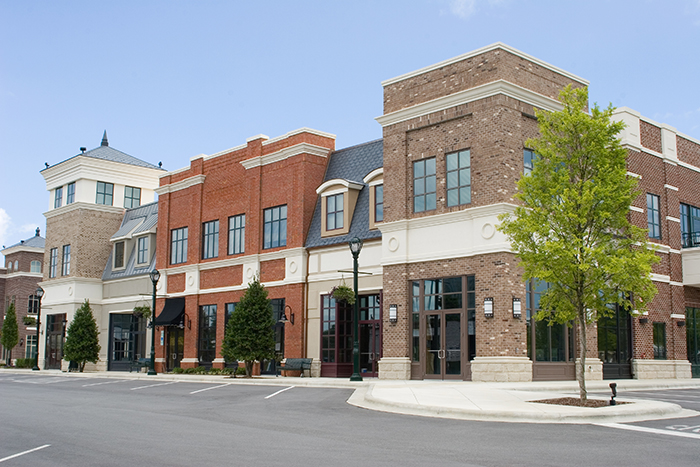
Retail real estate in southern Connecticut recorded nearly 700,000 square feet of positive absorption during the third quarter of 2019, as the vacancy rate declined to 5.2 percent.
Improving market conditions for industrial properties in Greater Hartford and retail space in Fairfield County were bright spots in Connecticut’s commercial real estate market in 2016, offsetting stagnation in the office sector.
One development opportunity has emerged because of demand for high-bay warehouse space, said Nicholas Morizio, president of the Hartford and New Haven office for Colliers International.
The vacancy rate for warehouses with minimum 30-foot ceiling heights is under 1 percent in the Greater Hartford and Springfield market, Morizio said. It’s a reflection of demand from e-commerce companies for distribution facilities near I-84 and I-91.
“Everybody wants to be closer to their customers and population and Connecticut has the proximity halfway between Boston and New York,” Morizio said. “There’s not enough good space available, so there’s going to be a lot more land sales and maybe people starting to put up some buildings with spec development.”
E-commerce also played into the year’s largest investment sale: German investor Deka Immobilien’s acquisition in April of Amazon’s new 1.5-million-square-foot distribution center in Windsor for $105.5 million.
Positive Absorption In Hartford Office Market
In Hartford, office landlords mapped out plans to increase the vibrancy of downtown properties, hoping to leverage the scheduled completion of UConn’s new downtown campus next fall. New York-based BHN Assoc., which bought six buildings in Constitution Plaza in 2015 for $71.1 million, plans to add a restaurant and host more outdoor events such as September’s music and craft beer festival to attract more visitors to the six-building complex.
A continuing multifamily building spurt that has added hundreds of new residents to the downtown area has laid the groundwork for a more vibrant street scene, said Chris Ostop, executive vice president in JLL’s Hartford office.
“People were doubting that people would want to live in downtown Hartford because it was feeling like an office park that happened to be built in a capital city,” Ostop said. “Now there’s more of a pulse.”
For landlords and developers, opportunities await to cash in on the increasing popularity of urban workspaces. The city of Hartford had 72,823 square feet of positive office space absorption through Sept. 30, reflecting renewals by big employers like Lincoln Financial, and expansion by smaller tenants.
Throughout the Greater Hartford region, year-to-date net absorption was negative 102,348 square feet, according to JLL research. Only the east and west submarkets, which are traditionally the strongest suburban regions, had positive absorption.
Corporate downsizing and mergers put more stress on office markets, with major employers trimming workforces and “right-sizing” their office space requirements to fit more employees.
Demand for office space has been dampened by diminishing space requirements in key industries such as law firms and accounting, Ostop said. Some accounting firms are eliminating assigned desks, reflecting the amount of time that auditors spend on the road, and reducing their real estate footprints.
Vacancy rates – currently 14 percent in Greater Hartford – continue to put a damper on plans for new office development, with just 25,000 square feet of office space under construction in the region.
The lack of demand for big blocks of single-use office space was reflected in new owners’ plans to redevelop The Hartford’s 172-acre former campus in Simsbury. The Silverman Group is proposing 208 townhouses and apartments as part of a mixed-use project including 11,600 square feet of retail space and a 120-bed assisted-living facility.
Retail Market Recovers In Fairfield County
Retail real estate in southern Connecticut rebounded in 2016, according to a report from Fairfield-based brokerage EAC Properties.
Nearly 700,000 square feet of positive absorption was recorded in the third quarter, including 220,256 square feet in 20 newly constructed buildings. The vacancy rate declined from 5.5 percent to 5.2 percent.
Stamford retail space showed “tremendous growth” in the past year, according to Andreas Senie, managing partner at EAC Commercial. Vacancy rates have declined from 3 percent at the end of 2014 to 2.2 percent in the third quarter. Quoted rental rates have risen steeply in Greenwich, increasing from $67 per square foot in early 2015 to $73 per square foot in the third quarter.
New development expanded the inventory of retail space in Greater Hartford by approximately 400,000 square feet in the 12 months ending in August, with Costco opening a new 156,000-square-foot wholesale club in New Britain and MattressFirm adding 16 stores with its acquisition of Sleepy’s.
But occupancy rates failed to keep pace regionwide. The vacancy rate rose from 10.1 percent to 11.1 percent during the year ending August 2016, KeyPoint Partners reported. Amid continuing competition from online shopping sites, it was the first year of rising vacancies following four straight years of improvement.
Manchester has the Hartford region’s largest retail inventory at 5.4 million square feet, according to research by Burlington, Massachusetts-based KeyPoint. Rocky Hill led all communities with the lowest vacancy rate of 4.4 percent.

