




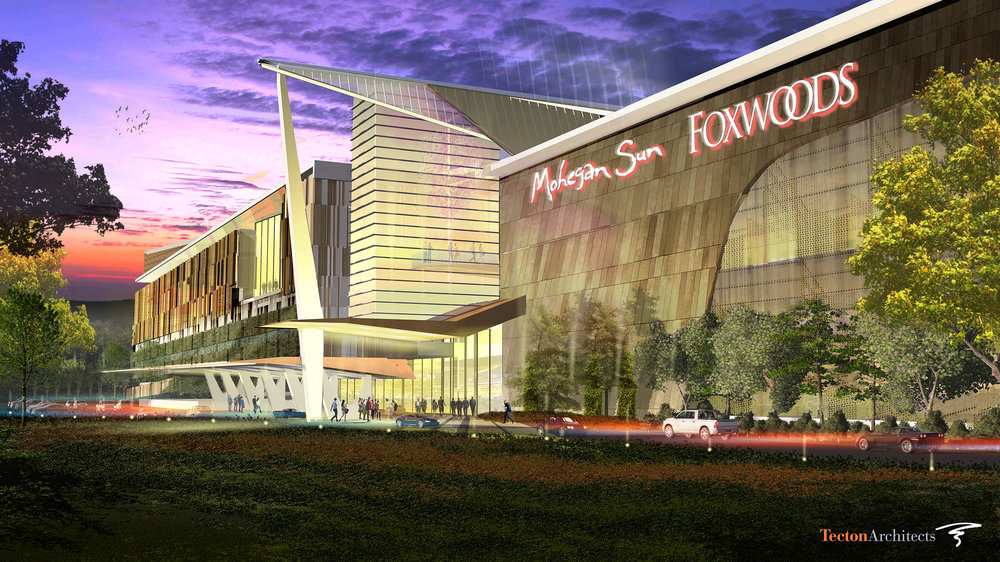
A 100,000-square-foot satellite casino proposed for a former cinema property in East Windsor is intended to protect Foxwoods’ and Mohegan Sun’s market share and their revenue-sharing payments to the state of Connecticut. Courtesy image
Connecticut’s two federally recognized tribes have received long-awaited approval from the federal government to push ahead with plans for an off-reservation casino in East Windsor.
The Mashantucket Pequot and the Mohegans, which created the joint venture MMCT, can now “move forward with construction on Tribal Winds Casino” along Interstate 91, Rodney Butler, chairman of the Mashantucket Pequot, said Thursday.
First discussed publicly in 2014, the joint venture was originally supposed to open before MGM Resorts opened its casino in Springfield, Massachusetts, last August, in the hopes of blunting competition from the newcomer. But those plans were stymied by the U.S. Department of Interior, which had refused to sign off on amended agreements required by a 2017 state law authorizing the casino project. The satellite casino has been pitched by the tribes as a way to help protect jobs at their existing Mohegan Sun and Foxwoods Resort Casino in southeastern Connecticut.
A memo posted Thursday by the U.S. Department of Interior says the agency’s assistant secretary of Indian affairs on Tuesday approved proposed amendments to two documents, including the Mashantucket Pequots’ memorandum of understanding, or revenue-sharing agreement, with the state of Connecticut.
“Now that the approval of our Amendment is secured and our exclusivity agreement with the State of Connecticut is reaffirmed, we will move forward with construction on Tribal Winds Casino in East Windsor and preserve much needed jobs and revenue,” Butler said.
The lack of action by the U.S. Department of Interior on the tribe’s plans in Connecticut has been the subject of a federal ethics investigation, one of several pending against former Secretary Ryan Zinke. The state of Connecticut and the tribes also filed a lawsuit against the agency in 2017, alleging improper and undo political influences and pressure, including from MGM, was behind the decision not to sign off on the agreements. Both Zinke and MGM have denied any wrongdoing. In a January interview with The Associated Press, Zinke also denied reports he may have lied to the Interior Department’s inspector general, saying he was asked twice about the casino decision and was truthful both times.
The AP previously reported the inspector general had referred an investigation into Zinke to the Justice Department.
Thursday’s decision comes amid continuing debate at the Connecticut state Capitol about the future of casino gambling in the state. Lawmakers have been sparring over whether to scrap the required federal approval in order to allow the East Windsor project to finally move forward, or to create a competitive bidding process for a new casino, possibly in Bridgeport, as proposed by MGM. The latter could risk the state’s 25 percent share of slot machine revenues from the two casinos, which amount to about $270 million annually and is part of the deal granting the two tribes exclusive rights to certain forms of gambling.
The General Assembly’s Public Safety Committee earlier this week advanced two dueling bills that would scrap the federal approval requirement and create a bidding process.
MGM has already legally challenged the state’s ability to give the tribes exclusive rights to casino gambling off their reservations. Uri Clinton, MGM’s senior vice president and legal counsel, said Thursday the gambling giant “will continue to pursue all legal options, including litigation, to defend our right to compete in Connecticut.” Clinton said MGM “remains steadfast” in believing Bridgeport is the best location for a commercial casino.
Earlier this year, tribal leaders said they have spent about $14 million so far on the $300 million project. The site has been purchased and cleared; most state and local approvals have been obtained; and a project labor agreement has been reached with the construction unions, they said.

