




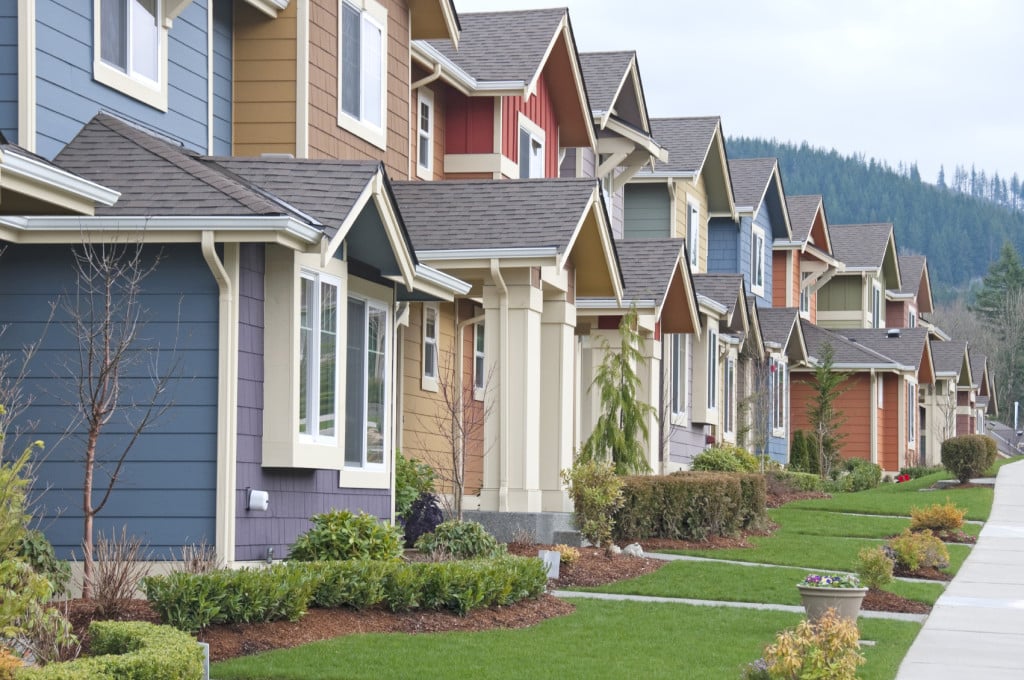
Homeowners looking to sell this spring could face a growing trend among buyers, especially Millennials. They want a house that looks ready to appear on HGTV.
“I have seen staging matter more than ever before and not just in the high end,” said Berkshire Hathaway agent Deb Alderson, president of the Mid-Fairfield County Association of Realtors’ board of directors. “Because the buyers, by and large, want it all fixed up, and they have gotten used to HGTV and seeing everything pristine and perfect.”
As the spring real estate season gets underway and interest rates remain relatively low, Realtors expect to see activity this year. But buyers, especially Millennials, have become more particular in the face of uncertainty about the state’s economic future, favoring homes in top condition instead of fixer-uppers.
Buyers Anxious About Future Values
While inventory is low in some areas of the state, some homeowners could find themselves unable to sell at the prices they want. More than a decade after the housing market crashed, much of Connecticut has not recovered its property values compared to other states.
“It’s safe to say across the state, we’re still struggling,” said David Gallitto, Connecticut Realtors board member. “It’s the deepest and longest downturn we’ve seen in real estate.”
Gallitto is with Huntsman, Meade and Partners, working in Central Connecticut along the Route 9 corridor. He said buyers will be out this spring, though perhaps not as many as in years past. Millennials are often satisfied with apartment living, he said, willing to remain on the sidelines while saving for their first home purchase.
What markets saw the most activity in 2018? Catch up with our look at the year that was in residential real estate.
Even with fewer buyers, sellers could receive multiple offers on their homes, Gallitto said. He added that sellers need to be realistic about the condition of the house and the expected price.
“If there’s not a lot of confidence in real estate and their ability to maintain or gain value in a particular piece of property, [buyers] might be unwilling to go above and beyond what an asking price might be,” Gallitto said.
Carl Lantz, also a CT Realtors board member and a RE/MAX agent in Hartford County, said fluctuations in the real estate market have made buyers cautious about their investments. Many are concerned about what could happen to property values over the next five to 10 years.
This caution extends to the home’s condition. Lantz said houses with old wallpaper, outdated kitchens and other structural needs have difficulty selling, especially among Millennials.
“I think that the maintenance factor and the fit and finish really hold all the value across the segments of the pricing,” Lantz said. “It doesn’t matter if you have a $250,000 house or a $950,000 house, what’s going to matter is: has it been maintained, what kind of condition is it in, how updated is it.”
| County | 2018 Single-Family Sales | Change from 2017 | 2018 Median Sale Price | Change from 2017 | Percent of 2018 Statewide Sales |
| Fairfield | 8,235 | -1.14% | $452,000 | 0.44% | 24.51% |
| Hartford | 8,457 | -2.94% | $227,000 | 4.24% | 25.17% |
| Litchfield | 2,197 | 2.86% | $230,000 | 2.22% | 6.54% |
| Middlesex | 1,861 | -4.61% | $270,000 | 2.86% | 5.54% |
| New Haven | 7,525 | 0.70% | $227,500 | 4.36% | 22.40% |
| New London | 2,706 | -6.40% | $230,000 | 4.07% | 8.06% |
| Tolland | 1,504 | -0.07% | $223,000 | 1.83% | 4.48% |
| Windham | 1,109 | -12.05% | $191,400 | 6.93% | 3.30% |
| Statewide | 33,594 | -1.94% | $258,000 | 3.24% | 100% |
Buyers Reluctant to Renovate
Alderson said many Millennials do not want to spend time on renovation projects. While not the only buyers this spring, this generation, ranging in age from 23 to 38, has affected how sellers need to prepare properties.
“Their lifestyle is such that they do not want to do it themselves,” Alderson said. “They have too many other things that they want to do with their time, and people who are not staging houses or don’t have sellers that are able to stage the house themselves are being disproportionately hurt.”
While many Millennials cannot afford high-end properties, those who can have affected this market as well, again seeking properties that meet their lifestyles. Homes with 4,000 to 5,000 square feet on a half-acre of land or less and close to a city have been most popular, Alderson said.
Explore Industry-Leading Real Estate & Mortgage Data
Dive into The Warren Group’s newest all-in-one system that dissects current and historical data covering sales, mortgages, HELOC, foreclosures, liens, and bankruptcies. The Custom Stats Module was developed by an expert team that understands the intricacies of the real estate and mortgage industries. With the aim to eliminate complexity, you can quickly glean the knowledge needed to make the right business decisions with confidence.
Alderson and Lantz both said that many high-end properties, even those just 25 to 30 years old, have been slow to move, especially when needing costly repairs.
Because people are willing to wait for ideal properties, Alderson sees this spring as a buyer’s market; sellers who meet Millennials needs should expect activity.
“The buyers have seen what’s on the market, and they’re dying to have something new come on that they can look at and buy,” Alderson said.

Staging matters more than ever with buyers conditioned by HGTV and nervous about the state’s economic future.
Interest Rate Drop Could Buoy the Market
The Realtors see relatively low interest rates as a benefit in this year’s market, a point that mortgage lenders agree with as well.
Mortgage lenders expect a better year in 2019 compared to 2018, though the market for higher-end properties may continue to move more slowly, said Terence Floyd, president of the Connecticut Mortgage Bankers Association.
One of the problems for lenders in 2018 was rising interest rates, which kept many buyers on the sidelines. Word from the Federal Reserve Bank that rates should remain stable this year will help the industry, he said.
Lenders have already seen fewer discrepancies between sellers’ asking prices and the appraisal value, Floyd said. Lenders also experienced issues with prospective borrowers, often Millennials, who had employment gaps or credit problems that affected qualifying loan amounts. Floyd expects to see fewer of those issues this year.
“I wasn’t as optimistic in 2018 – I was positive, but not as optimistic,” Floyd said. “I knew it was going to be a rocky year, but this year I feel much better; I really feel like it’s going to be a strong year for all of us.”
Even with potential for a stronger real estate market this spring, the state still has not reached a place that many in the industry want to see.
“I think there’s a holistic effect that we need to see a little more of in Connecticut, which is: we need to see our economy on the whole get stronger,” Lantz said.

