




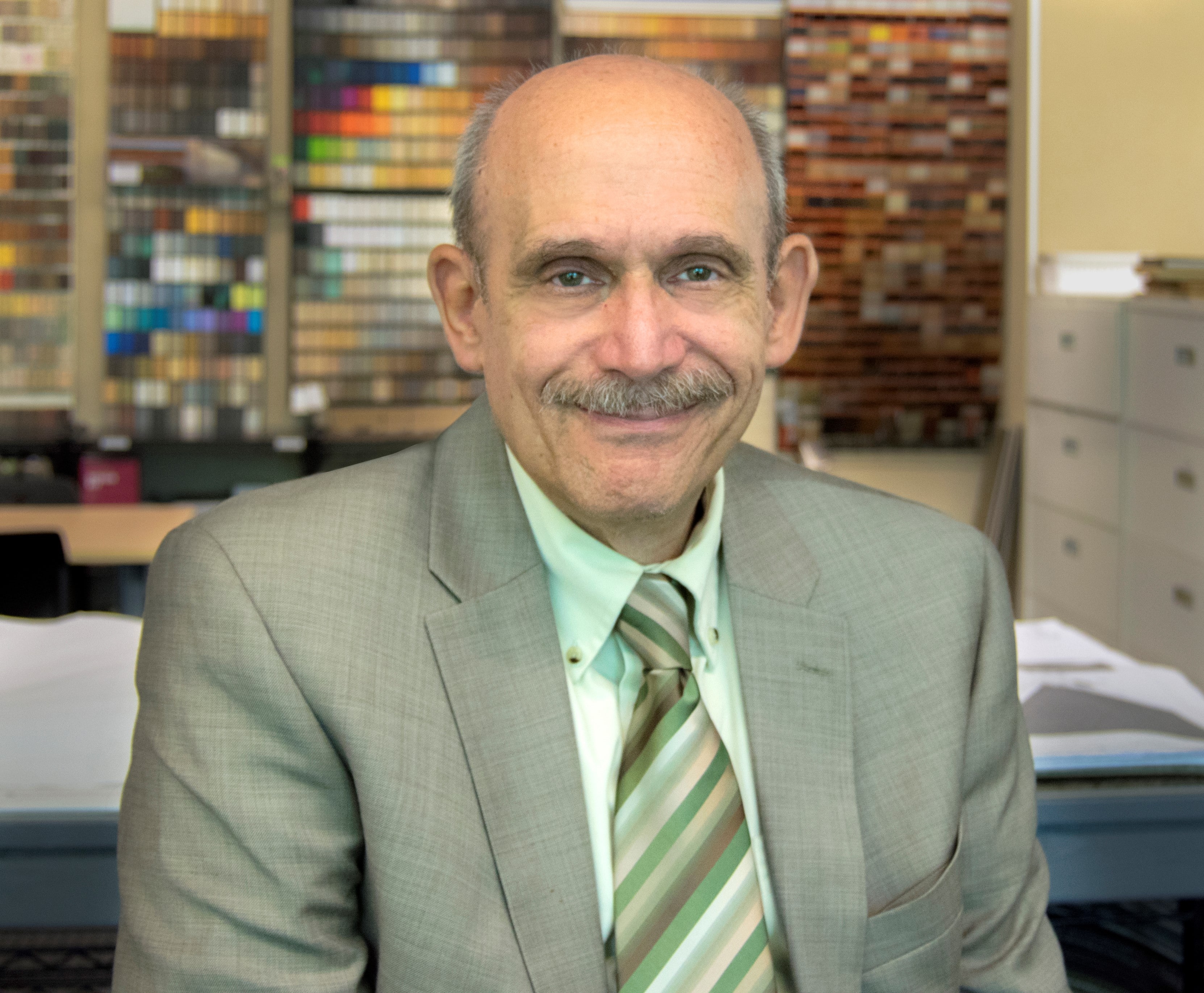
Ross Spiegel
Chair, Connecticut Green Building Council
Age: 72
Industry experience: 40 years
Seeing a photo of his favorite uncle and building contractor standing shoulder-to-shoulder with native American steelworkers atop a Manhattan skyscraper frame inspired Ross Spiegel to become an architect. Now in his fourth decade in the industry, Spiegel continues to look for new ways to enhance building design. At SLAM Collaborative’s Glastonbury headquarters, where Spiegel is specifications coordinator, he’s known as the go-to person for questions about new building technologies and equipment. Spiegel’s interest in the latest industry advances extends to his leadership position at the Connecticut Green Building Council, where he was recently elected board chair for 2020.
Q: How long have you been active on the Green Building Council?
A: The council was founded in 2003 and I’ve been a member since 2004. We’ve grown a lot and in many ways we’ve become much more diverse. This year we have a majority of women board members and we do have people of color. The backgrounds and employment histories of people have changed. Generally, you’d see architects and engineers as the main group of people. We now have contractors, government employees, consultants and educators.
Q: As an architect, what green technologies are you most excited about in the commercial and multifamily sectors?
A: People are starting to look at what we call embodied carbon. One type of carbon is operational, which is what makes the building run after it’s complete. But there’s also a carbon count that takes place in extracting, manufacturing and delivering the products that go into the building. People are starting to look at that very carefully.
Concrete has been used since Roman times and is the largest contributor to carbon, which is the largest of the greenhouse gases. There’s a lot of alternatives to cement that are coming onto the market. Window glazing technology, which we sometimes think of as being new, has been around for decades. We’re seeing treatments of the glass where when the light hits it is starting shading and turns darker. And the rise of timber construction using reconstituted wood products. The other area of interest is net zero or net positive projects. The Green Building Council is sponsoring a conference Jan. 31 at Yale called the Net Zero Schools Summit.
Q: What are CTGBC’s priorities for government advocacy in 2020?
A: I’ve chaired the advocacy committee for seven years. We’re putting together working groups to delve into different issues from the governor’s Council on Climate Change from December 2018. We’ll be doing a lobbying day in the state capitol in February or March to educate legislators and looking to become the source of green building information. And we’re looking to expand our membership: last year we went over 200 and we’re looking to get to 300 by the end of the year.
Q: What do you consider to be the most important recommendations from the Council on Climate Change’s report?
A: What surprised us was there’s very little conversation about the impact of buildings in the report. There’s a section which talks about buildings, but it talks about the energy impact. The energy-related carbon emissions from buildings are 31 percent [of the state’s emissions] on an annual basis. Most of that is the operational energy, but 11 percent is the embodied carbon and building materials. We’re going to be advocating for more on the impact of buildings.
The state has quite a few buildings they own and manage, and they are building and updating others. Since 2009, they’ve had a high-performance building guideline and that applies to any project that is funded in part by the state of Connecticut. Now they’re reviewing those guidelines and looking at the possibility of adopting the International Green Construction Code to take the place of that. Another area where I’m seeing a lot of interest is the health of the people in the building through rating systems like WELL and Fitwel.
Q: Do you run into conflicts between your role as an advocate for sustainable buildings and that as an architect whose clients are trying to control development costs?
A: We don’t necessarily start with saying, “Your project needs to be LEED-certified.” We talk about what they are able to do with the budget and their building program. I’ve always looked at it as: if your building provides a healthier environment for occupants, or if you’re able to reduce energy and water consumption, you don’t necessarily have to have a certified building. You’ve done better than you would have done otherwise. There are some things we can do in specifying building materials where it would have been a dollar issue, but today they’re so common there’s no impact on the cost of those materials.
Q: Which of the council’s educational forums have been the most well-received, and what areas are members looking for more training?
A: Last year’s topic was equity of place: a focus on looking at how we can provide sustainable projects for people who are not on the top rung of the economic ladder. One other program we’ve sponsored is training building owners and managers on energy management and building management systems. It’s another area where there’s a great need. Somebody at the state of Connecticut mentioned they had a brand-new building that was LEED-certified and they did not have somebody who could understand how to run the building management program. Design professionals understand it, but we haven’t made the outreach to the people who take over the building once it’s done.
Spiegel’s Five Favorite Careers If He Hadn’t Become an Architect
- Egyptologist
- Disc jockey
- Professional bowler
- Artist
- Building contractor

