




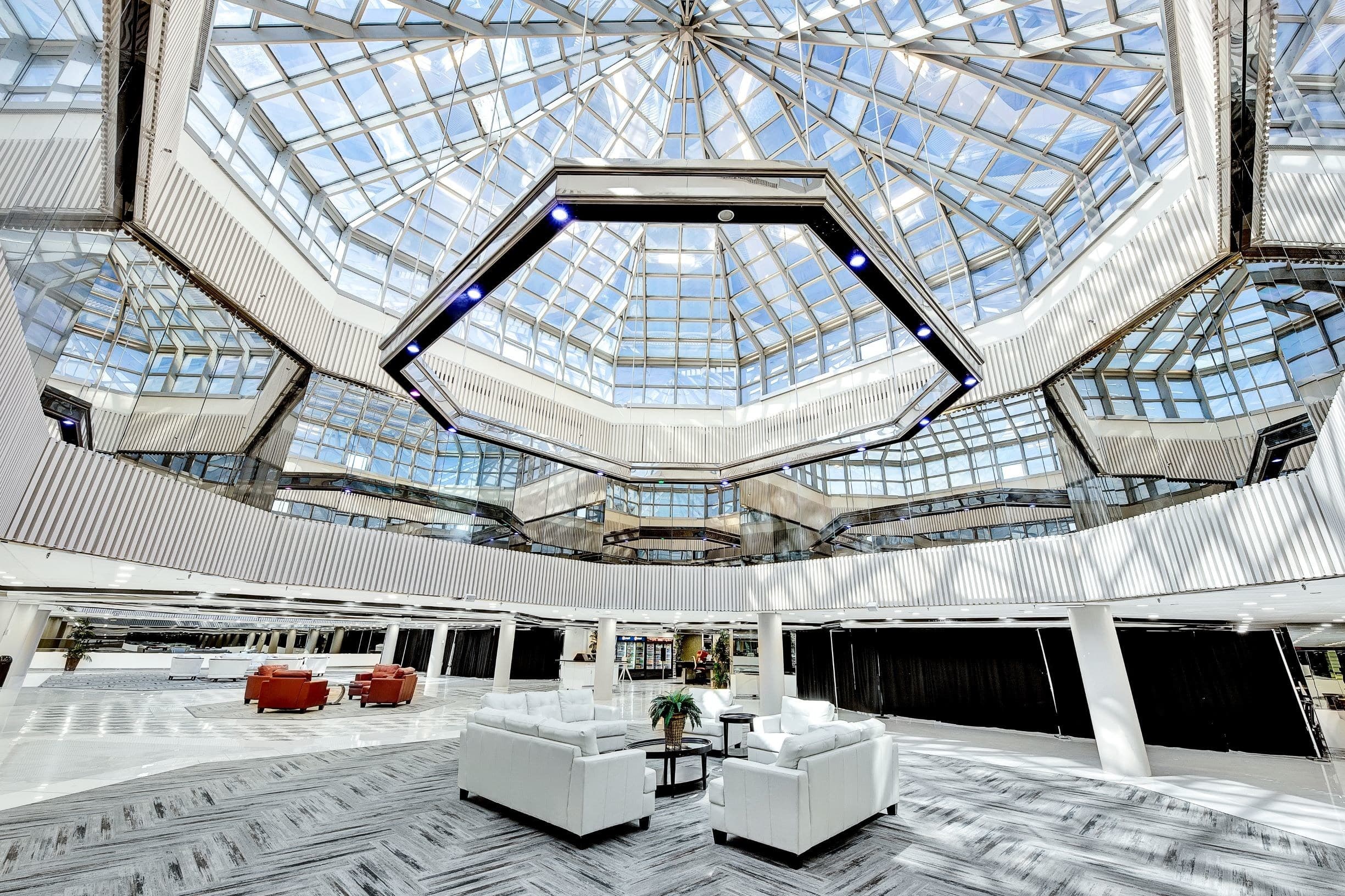
Conversion of conventional office space into medical clinical space is likely to continue in 2021, following Nuvance Medical Systems’ lease in late December of 220,000 square feet at The Summit in Danbury. Photo courtesy of Summit Development
Demand for multifamily and industrial properties will remain strong throughout 2021 as Connecticut’s commercial real estate market adapts to the changing landscape ushered in by the pandemic, industry executives predict.
Future prospects for office buildings’ and hotels’ occupancy remain murky pending the rollout of the COVID-19 vaccine and new concerns about a more transmittable strain of the virus that threatens to prolong the pandemic.
“Office is at the bottom of the [property sectors] because nobody has figured out who’s going to come back, when they’re going to come back and what work is going to look like,” said Al Mirin, executive managing director for Cushman & Wakefield in Stamford. “My personal opinion is fewer people will be working in the office, but companies will occupy more space per person, and it’ll almost be a wash.”
The pandemic appears to be accelerating the existing trend of office buildings being repurposed as medical space, said Tom Pajolek, executive vice president at CBRE in Stamford. In an otherwise quiet fourth-quarter for leasing activity, Nuvance Health Systems leased 220,000 square feet at the 1.2 million-square-foot Summit in Danbury. Nuvance plans to consolidate its headquarters, back office space, lab space and clinical facilities in the complex, originally developed as the Union Carbide headquarters and repositioned as multitenant space by owner Summit Development of Southport. Summit also plans to convert a portion of the building into 200 apartments.
“Conventional offices are being repurposed for medical use, and we’re going to see more in the coming year because office demand will be affected by the work-from-home trend,” Pajolek said.
Migration of New York City office tenants to suburban Connecticut properties hasn’t materialized in significant numbers, Pajolek said, while most existing tenants are opting for short-term lease extensions.
Office leasing was sluggish in the fourth quarter, with only 343,000 square feet of leases signed outside of the Nuvance deal, many of them short-term expenses, Pajolek said.
Robert Pulito, president of Glastonbury-based architects S/L/A/M Collaborative, anticipates a long-term rebound in traditional workplace models, potentially with reduced capacity.
“I do think the suburban office headquarters is going to come back,” Pulito said. “The smaller-scale cities are going to become much more attractive. Everybody is trying to figure out what their capacity is going to be. Even we as a company are trying to figure that out. We may not need the square-footage we had, because we’ve learned to work so well remotely.”
Demand for Distribution Centers Remains Strong
Properties suitable for warehouse and distribution use have prompted a series of developments along the I-91 corridor, but e-commerce companies’ demand for last-mile distribution centers adds another layer of demand in the industrial market. Online commerce companies are looking for smaller facilities near population centers where sprinter vans pick up items for final delivery. Such facilities don’t require the square-footage, clear heights and turning radiuses for 18-wheelers, Mirin noted, giving developers a wider range of properties to consider.
Multifamily and industrial developers will drive the bulk of demand in Greater Hartford, said Nick Morizio, president of the Hartford and New Haven offices for Colliers International. Colliers is marketing five major industrial properties including Metro Park North, a 120-acre site on King Street in Enfield with 600,000 square feet of distribution space scheduled for occupancy in late 2021.
Apartments Coming to 58-Acre West Hartford Site?
Colliers International’s Hartford office also is marketing the largest development site to become available in West Hartford in over two decades: the 57-acre former University of Connecticut campus in West Hartford, following the decision by New York-based Ideanomics not to pursue its $400-million Fintech Village development plans. The town of West Hartford let its first option to acquire the Asylum Avenue property expire at year’s end, clearing the way for the sale to a private developer.
Morizio said the site has attracted strong interest from apartment developers who would demolish the four existing buildings, which total 158,000 square feet.
Multifamily properties in Fairfield County also will be a favored acquisition of investors in 2021, as occupancy rates exceed 93 percent and rents are continuing to rise, Cushman & Wakefield’s Mirin said.

