




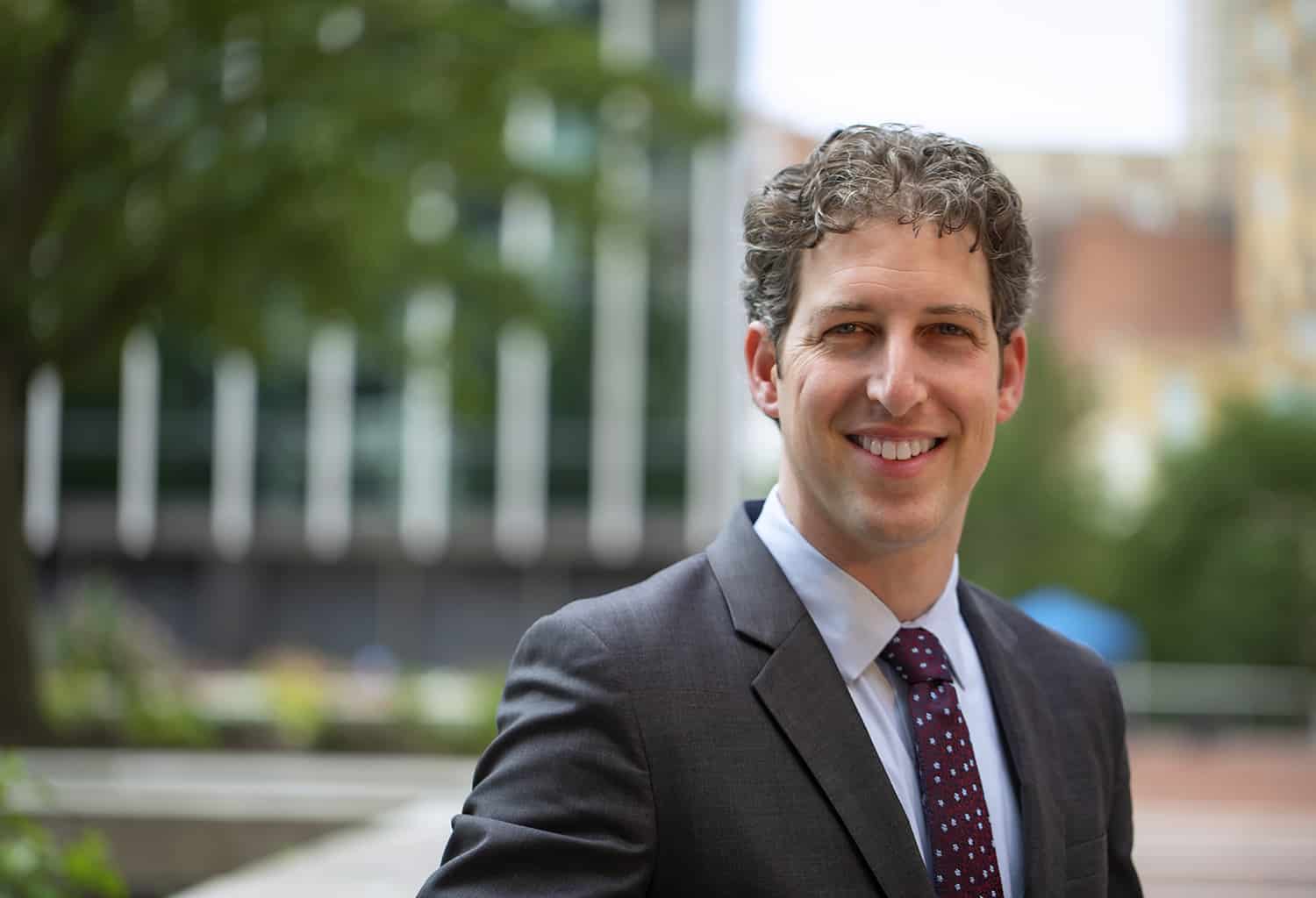
David Kooris
President, Stamford Downtown Special Services District
Age: 40
Industry experience: 17 years
David Kooris describes his organization’s job as filling in the gaps between the facades of downtown Stamford buildings. As president of the Stamford Downtown Special Services District, Kooris coordinates the organization’s sponsorship of events and promotion of Stamford’s retail and restaurant industries. The 29-year-old organization took a step back in 2020, canceling popular events such as its Alive@Five weekly summer concert series, but shifted gears during the pandemic by helping members get approval for expanded open-air operations. Kooris is a former deputy commissioner in the Connecticut Department of Economic and Community Development during the administrations of former governor Dannel Malloy and current Gov. Ned Lamont.
Q: You mentioned during a recent webinar that not a Stamford downtown restaurant went out of business in the past year. What helped members hang on during the pandemic?
A: Our restaurant count is just about 100 and we were in the 90s going into the pandemic. There’s maybe one or two that have sort of rebranded, but we are net positive about a half-dozen restaurants. Folks did a phenomenal job holding on through an incredibly difficult time. They did that by being creative, shifting to takeout and we helped them understand the regulations and comply, helped them get the word out and market what they were offering but most importantly, keeping the expanded outdoor dining. Multiple establishments told us that was the difference. The state, through the governor’s executive order, and now codified through the legislature, created flexibility for liquor permits which made expanded patios a bit easier. We worked with the city on a comprehensive plan for all of downtown, looking on a block-by-block basis where we could shift parking and travel lanes to dining. We spearheaded that together with the police, health, traffic and economic development departments, making sure everyone was on the same page, and we as an organization permitted all that ourselves. So all of the individual restaurants just had to articulate to the city how they were laying out their seats so it was clear they were conforming with social distancing. And we did the heavy lift of getting the city agencies aligned and getting one blanket permit. To the city ‘s credit, they demonstrated a phenomenal amount of flexibility and acknowledged the scale of the challenge.
Q: How did Stamford Downtown offset the loss of the large-scale gatherings?
A: We had to cancel some of the bigger events: the concerts, the Parade Spectacular, but we were able to pivot on the smaller things. We were able to hold the farmer’s market all season. We shifted from Latham Park to a surface parking lot to give us the room we needed for distancing. We metered entrances and added hand sanitation stations. Around Thanksgiving, we typically had the parade. We did a giving float instead. Sponsors donated funds, allowing us to give our turkeys and gift cards, and we partnered with Person-to-Person to identify the recipients of the benefits. Instead of Rappelling Santa, we filmed a special for the YES Network with Brian Cashman of the Yankees.
Q: Are you targeting promotions to new residents who have moved into multifamily properties?
A: The absorption has been incredible with occupancies in the mid- to high-90s across the board. Connecticut has seen an influx of people since the pandemic and a lot of that has been in southwest Connecticut in general and Stamford in particular. Our mission now is to convert those people into permanent residents, whether it’s people who rented here for a year or the company that signed a two-year lease to be closer to their workforce. Now we need to convert those companies and households into long-term Stamford residents. Part of the way we do that is making sure our spaces and streets are flexible for a wide range of uses and closed down for special events. We’ll bring back “Bark in the Park” and we’ve pushed the concerts to September to be safe and are moving them to Mill River Park this year instead of Columbus Park. We’re confident by the fall more people will be back in the offices and comfortable in the big crowds. We think this summer is going to be a high demand season, but also a rare opportunity for us to put our best face forward for all of these new residents and new workers.
Q: What percentage do the property surtax on downtown properties contribute to the Stamford Downtown budget?
A: Over the last five years or so, tax revenue is about 55 percent of our full budget. That number went up closer to 70 percent during COVID and we expect it’ll get back to the typical ratio next year when we’re raising revenues and get support for special events.
Q: How does your background as an economic development official in the governor’s office inform your approach to the Stamford position?
A: My background with the state is important for a couple of reasons. It’s knowing how the state operates and what programs are available, who to reach out to. Having that understanding of Hartford is a resource I work hard to bring to our partners. It also works the other way. We’re always griping about the important role that southwestern Connecticut plays in the state and how far away Hartford feels. This administration is very committed to recognizing the role that Stamford plays as an economic engine. I see myself as a liaison both ways.
Q: What can the state government do to support Stamford’s vitality?
A: Of crucial significance is upgrades to the train station. While the commute to Manhattan is not going to exactly what it once was, there will still be people coming in and out of there and there will be intra-suburban commuting. Beyond that, it’s a whole range of supports: education and workforce development and investing in UConn [Stamford]. That is a critical importance to downtown: recognizing that UConn Stamford has an independent and significant role it can play outside of Storrs. So often, the satellite campus is seen as an appendage, rather than something that has a different niche.
Q: What are downtown office tenants saying about return to the office plans?
A: It’s starting to come into focus. We’re hearing more and more that companies are communicating there’s an expectation of some coming back to the office starting in June, and we keep hearing September as a major time period for a great influx. I’ve also been looking at a lot of national surveys and there seems to be some clear findings that employers are shifting to a hybrid model. Those early announcements by tech firms in San Francisco that people can work from home for ever is not going to be the norm. The norm is people coming into the office for the collaboration.
Kooris’ Five Favorite Parks Outside Stamford
- Mt. Royal Park, Montreal
- Royal Botanic Gardens, Sydney
- Brooklyn Bridge Park, New York City
- Kitsilano Beach, Vancouver
- Montmartre, Paris

