




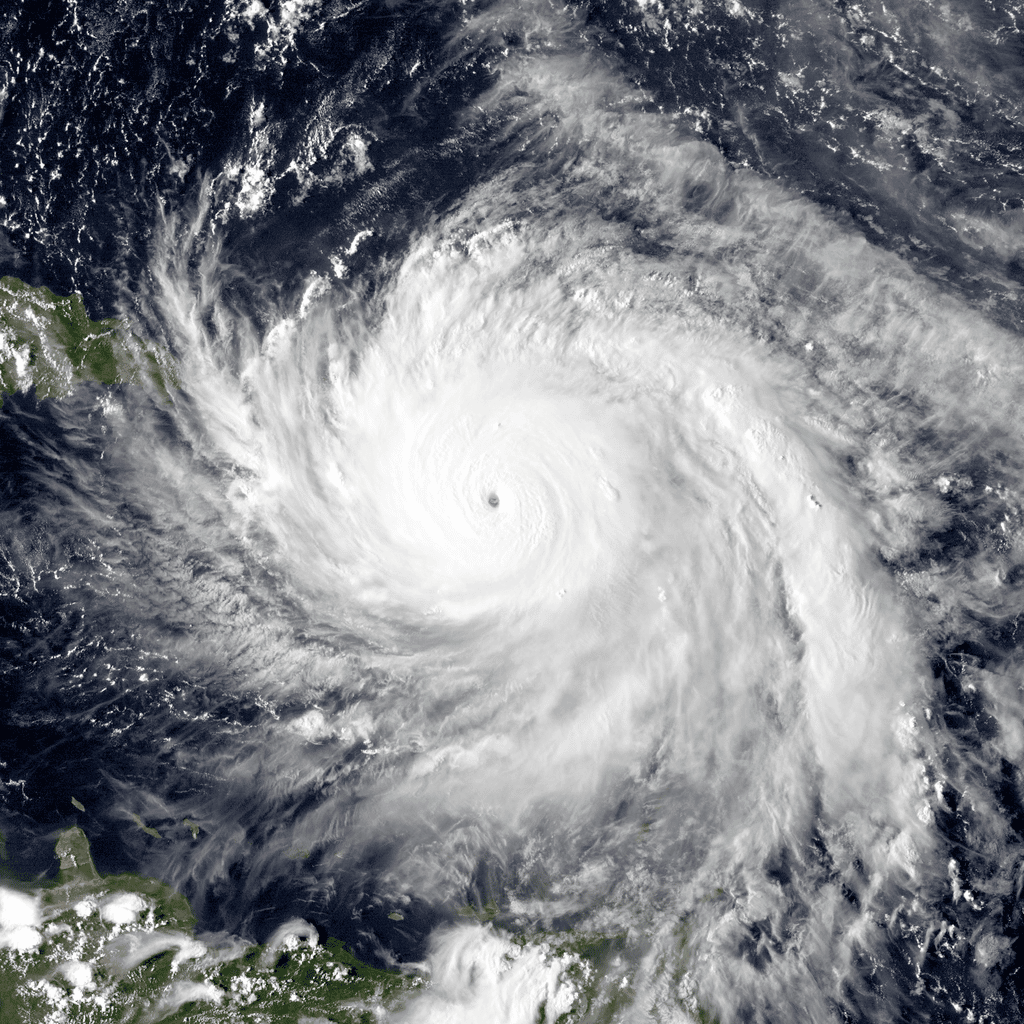
Hurricane Maria near peak intensity, moving north towards Puerto Rico, on Sept. 19, 2017. Image courtesy of the Naval Research Laboratory / NOAA / Public Domain.
As climate change warms the Atlantic Ocean, making hurricanes more powerful as they travel north, the Northeast will likely see an 87 percent increase in damage from hurricane winds, new research says.
The First Street Foundation, a nonprofit insurance research center that powers flood risk projections on Redfin and Realtor.com home listings, has released a new analysis that digs into the other major source of hurricane damage.
Over 13.4 million more properties nationwide will be exposed to hurricanes nationwide over the next 30 years, the foundation estimates, thanks to the increasing share of such storms that reach Category 3 status and beyond, and meteorological research that suggests more hurricanes will track northward along the East Coast.
“Quantifying hurricane wind exposure and the resulting financial implications for every property in the country ushers in a new era in the understanding of the physical impacts of climate change,” said Matthew Eby, Founder and Chief Executive Officer of First Street Foundation. “Compared to the historic location and severity of tropical cyclones, this next generation of hurricane strength will bring unavoidable financial impacts and devastation that have not yet been priced into the market.”
Gulf Coast and Florida landowners will bear the brunt of the increase, with just the number of Florida properties likely subject to Category 5 storms set to grow from 2.5 million in 2023 to 4.1 million by the year 2053 causing up to a $1 billion rise in average annual damages in that state alone.
But the report finds that states in the Northeast will see increasing risk, as well. Hartford, New Haven and Middlesex counties are likely to see a significant increase in the percent of properties exposed to likelihood of “some damage” from a hurricane by 2053, along with Nassau County on Long Island.

