




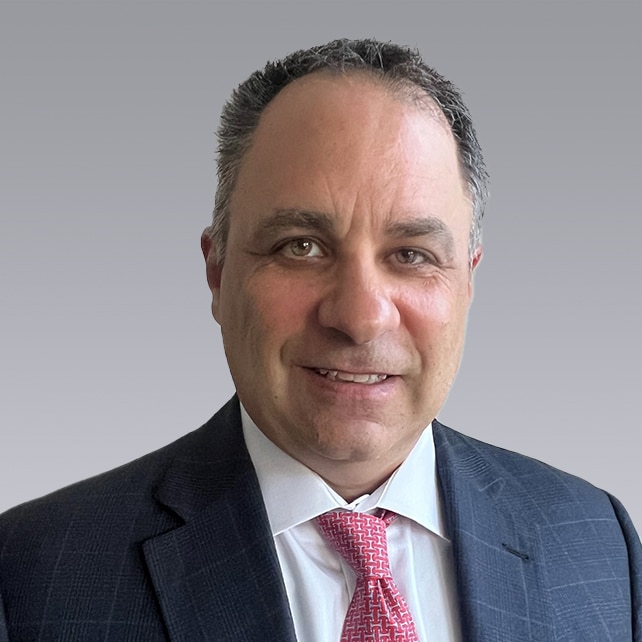
Michael Deutsch
Senior vice president, Colliers
Age: 54
Industry experience: 5 years
Real estate investors seeking to avoid paying capital gains taxes when selling a property often turn to 1031 exchanges, in which they acquire a property of equal or greater value within 180 days. Delaware Statutory Trusts offer the same tax advantages while providing diversification, enabling investors to acquire a beneficial interest in the trust, which can acquire multiple properties in different real estate asset types. Michael Deutsch brings his experience setting up DSTs to his new role as a senior vice president for Colliers’ Stamford office, along with his background in investment sales and leasing of office and industrial properties. A licensed securities broker, Deutsch recently completed such 1031 transactions as a $15 million sale of 956 Brush Hollow Road on Long Island and the $4.4 million sale of 756 Nepperhan Avenue in Yonkers. Prior to his career in commercial brokerage, Deutsch owned a lighting fixture manufacturing company.
Q: What are some of the advantages of 1031 exchanges using the Delaware Statutory Trust model?
A: I got into real estate as a later-in-life career change, and kept trying to sell people buildings. Nobody was enamored with the triple-leased products, but I found Delaware Statutory Trusts, which are very similar to mutual funds. They’re private REIT’s that put out an offering on a building, and sell shares of the building. What the customer receives is a beneficial interest in a trust. You can construct a portfolio to create diversification, both geographically and in type of asset and term. Let’s say you are buying a 300-unit multifamily property. At any time, you’re going to have a number of leases available, and in an inflationary environment, that allows the landlord to increase the rent. You can structure it like a bond ladder. You have short-term investments such as multifamily, medium-range is typically medical properties, and stable investments, such as industrial. You get all of the benefits of a 1031 exchange, and also the benefits of getting a real property. You’re not buying a hole in the ground [such as a development site]. You know almost exactly what the cash flow is going to be for 20 years.
Q: Are you seeing more interest in 1031 exchanges this year because of the Biden administration’s proposed elimination of this part of the tax code?
A: What’s going on at the top of the real estate market, whether it’s a DST or anything in the commercial space, is interest rates went up and buyers and sellers can’t adjust. You have people making mean faces at each other. It’s harder to get debt anywhere, whether it’s a DST or anything you’re buying. Transaction activity is down 50 to 80 percent at the big brokerages, and that’s just due to interest rates going up. I haven’t done an office deal in almost two years, so I’m mostly doing industrial and 1031 exchanges.
Q: While office sales volume has declined, how active is the industrial investment sales market?
A: The better buildings are still trading, but the prices have just come down and the market is going through a pricing discovery at this point: what the real value was when rates were 2 percent, and what should be the value when it’s 5 percent. Buyers and sellers are disagreeing on what that number is. I haven’t seen anything new coming up out of the ground [speculatively]. They are finishing up what is going on, but when Amazon pulls back in the industrial real estate world, they were setting the market and creating the market with these enormous buildings. But now we’re even seeing Amazon putting warehouses on the market for sublease. There was a time when Amazon wasn’t particularly price-sensitive. They would pay to get it if the building was right for them.
Q: What is your own personal experience with DST transitions?
A: My family owned some real estate and we didn’t want to be active managers. We really wanted to create diversification. Instead of owning one building, you could have one fund that owns 20 buildings. People who had a $5 million or $10 million portfolio can’t create that type of diversification and go into different markets geographically. If you talk to most small landlords, they underperform the averages because they’re not good at it.
Deutsch’s Five Favorite Forms of Exercise:
- Pilates
- Exercising with free weights
- Road biking
- Hiking
- Beach walks

