




Image courtesy of CBRE
A growing majority of office tenants plan to expand their real estate footprints in the next three years, according to a nationwide survey of occupier sentiment.
Two-thirds of tenants said they plan to expand, although many report difficulties finding high-quality office space in good locations, according to CBRE. But the largest companies – those with at least 10,000 employees – expect to further downsize in coming years.
CBRE’s Americas Office Occupier Sentiment Survey tracks the continuing evolution of office occupancy patterns in the post-COVID era, following the widespread adoption of hybrid work policies.
The upshot for office sector investors: Demand for class A buildings with desirable amenities in walkable locations will remain strong.
And landlords appear to have leverage in negotiating with existing tenants. The survey found 86 percent of respondents plan to renew their existing leases.
One key category is the exception to expansion plans: the largest office tenants. Among companies with at least 10,000 employees, 60 percent plan more space reductions, according to survey respondents.
In Greater Hartford, the suburban submarket captured the most leasing activity during the second quarter, CBRE reported last month. Hartford County tallied the highest leasing totals in two years at 247,000 square feet. The 3.3 million square-foot south suburban market, which includes Rocky Hill, now has the highest average asking rents at $23.13 per square foot.
Downtown Hartford’s office market has nearly 175,000 square feet of negative absorption in 2025, and an availability rate of 24 percent. Uncertainty about the future ownership of large office buildings may be inhibiting leasing activity, experts say.
In Fairfield County, by contrast, the availability rate dropped during the second quarter from 25.4 to 25 percent, and sublease listings have shrunk from a peak of 2.5 million square feet in mid-2022 to 1.2 million square feet as residential conversions eat into the area’s backlog of unused office space.
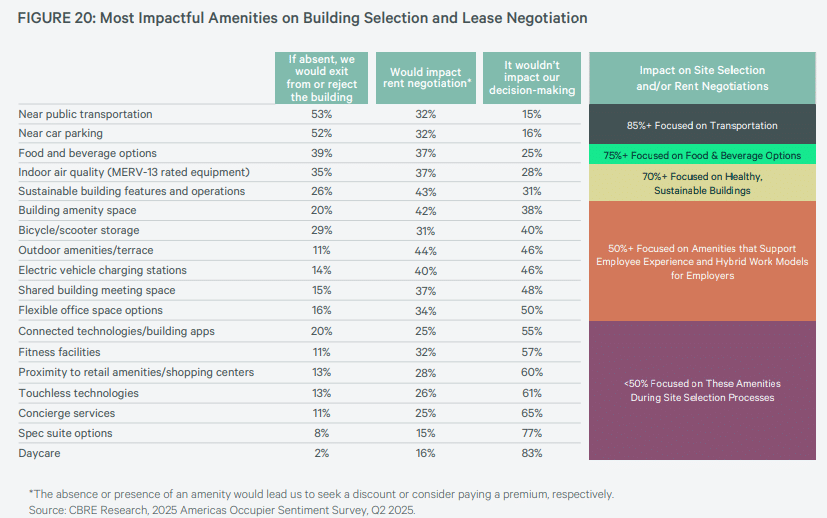
Despite record vacancy levels in many metro areas, the CBRE survey found dissatisfaction among tenants in their options for high-quality, well-located office space. It recommends that landlords invest in high-impact amenities for the best return on investment.
Food and beverage ranked third among respondents in desired building amenities, trailing only proximity to public transportation and parking availability.
“Focus investments on controllable, high-impact amenities, like food and beverage options, sustainable features, shared meeting areas, and outdoor spaces, that influence lease decisions and rent negotiations,” CBRE researchers recommended in the report. “Most tenants, especially large ones, prefer to renew when satisfied with their current space. Office owners should focus on strong property management, flexible lease terms, and the most valued amenities.”
Overall, 67 percent of respondents said they will maintain or expand space over the next three years.
But a majority of the largest office tenants are planning to continue downsizing their real estate footprints: some 60 percent indicated they will reduce office space, compared to 18 percent of all other respondents.

