




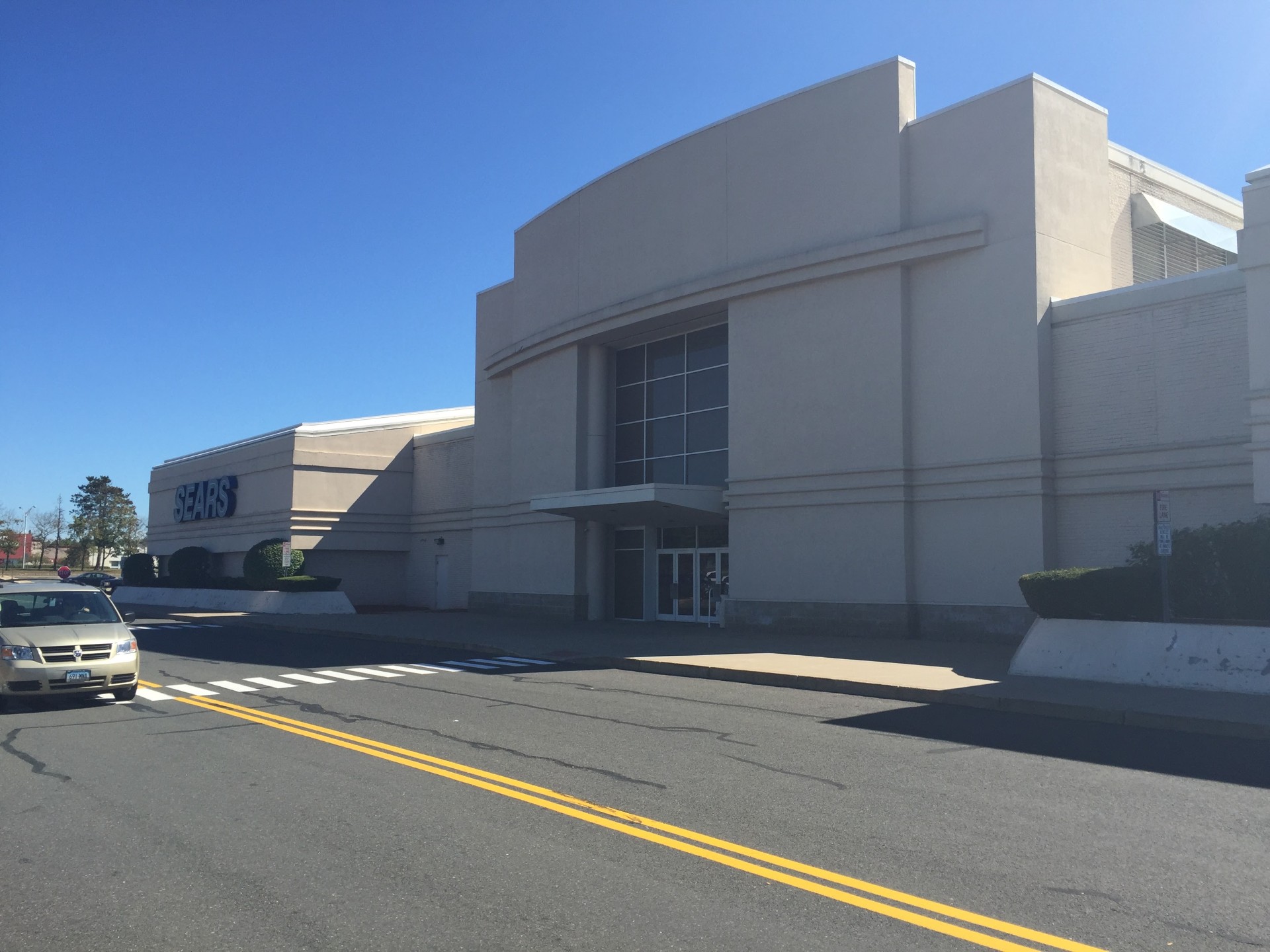
Enfield Square Mall’s declining fortunes were highlighted by the departure of anchors Macy’s and JC Penney in the previous decade. Photo by Steve Adams | Commercial Record Staff
The opening of Waterford’s Crystal Mall in 1984 was considered nothing less than a tectonic shift in New London County’s economy.
Just the second superregional mall ever built in the Nutmeg State, it gave eastern Connecticut residents an opportunity to shop at high-end department stores such as Filene’s which previously required trips to destinations such as the Westfarms Mall outside Hartford or the Warwick Mall in Rhode Island.
Today the largely-vacant property at 850 Hartford Turnpike is featured by social media influencers and websites exploring the eerie phenomenon of “dead malls” and their hundreds of thousands of square feet of vacant space.
In June, a mainstay of eastern Connecticut’s economy materialized with plans to reactivate a former anchor space at the Crystal Mall, but with a distinctly different use. General Dynamics’ Electric Boat division acquired the former Macy’s anchor pad and announced plans to open a research and training lab for approximately 700 employees.
Located on a 7.4-acre parcel, the 121,000 square-foot R&D hub will support Groton-based Electric Boat’s production of Columbia- and Virginia-class submarines for the U.S. Navy, and potentially the Royal Australian Navy, too.
And in Enfield, a Nebraska developer this month began formal permitting to pursue a vision of a mixed-use redevelopment of the town’s struggling 664,000 square-foot mall.
Across the nation, reinvention of malls is spurring billions of dollars in reinvestment.
CBRE brokered $4.2 billion in retail transactions in 2024, including changes of ownership catalyzed by redevelopment and repurposing of traditional malls. The brokerage is on a pace for $5 billion in major retail property transactions this year, Executive Vice President Richard Frolik said on a company podcast this week. Casinos, hotels, fitness centers and restaurants all have replaced former anchor stores.
“Every year there’s somewhere between 30 and 50 regional malls traded, $2-4 billion [of total transactions] on average over the last 10 years,” Frolik said. “Each buyer is typically unique. There are people who are buying cheaper by square foot and higher yields, but there are also users and high net worth family offices that are putting it together and taking down these transactions.”
A Watershed Moment for Local Economy
Completion of Waterford’s Crystal Mall in 1984 represented not just a new era for New London County’s retail landscape, but a watershed moment for the local economy. The 885,000 square-foot development on an 85-acre parcel off Interstate 95 near the New London line represented eastern Connecticut’s first regional shopping destination.
When it was first proposed in 1979, the project was viewed as an existential threat to the economy in nearby communities, particularly New London’s downtown shopping district and smaller enclosed mall.
The Downtown New London Association merchants group and other opponents filed suit in Superior Court seeking to block construction. In an out-of-court settlement, Newton, Massachusetts-based State Properties of New England agreed to pay $1.5 million toward road projects and economic development initiatives in New London.
Punctuated by a lavish grand opening party attended by thousands, the mall’s arrival solidified that the town of Waterford “had at that very moment succeeded New London as the hub of the universe for this once quiet and provincial region,” a columnist for The Day newspaper wrote at the time.
During its first year, the property attracted an average of 170,000 shoppers per week, drawing from a 50-mile trade radius, The Day reported. The mall thrived in its initial decades, anchored by destination retailers and restaurants such as Filene’s, Jordan Marsh and Charley’s Eating & Drinking Saloon.
But downsizing and bankruptcies by retail anchor stores and in-line tenants alike took a steady toll at the Crystal Mall, mirroring the fortunes of many enclosed malls across the U.S. In 2023, Great Neck, New York-based Namdar Realty Group submitted the high bid of $9.5 million at a foreclosure auction. The last anchor store, JC Penney, closed in 2024.
In June, a mainstay of southeastern Connecticut’s defense industry materialized as an unlikely new source of jobs and foot traffic at the 850 Hartford Turnpike property.
General Dynamics Electric Boat said it will refurbish the former department store for R&D labs and open the new center in March 2027. The purchase follows a series of other real estate projects by the submarine maker as it ramps up production at its Groton shipyard, including plans to develop a 480,000 square-foot warehouse at 45 Frontage Road near Interstate 95 in North Stonington.
Enfield Square Mall Review Begins
In Enfield, a Nebraska developer is pursuing wholesale changes to the town’s enclosed shopping mall.
Woodsonia Real Estate Group proposes the redevelopment under a new “special development district” zoning process approved by city officials earlier this year. The Enfield Square Mall is currently 86 percent vacant, following a spiral of decline punctuated by the closure of anchors Macy’s and JC Penney in the previous decade.
The project combines the existing parcels spanning 72 acres into a single lot and creates three new districts, including a section designated for over 700 housing units, and another with nine commercial development sites totaling nearly 296,000 square feet. The Target store and a second big-box style tenant would occupy the central portion.
Like the Crystal Mall, the Enfield property is owned by Namdar Realty, a Long Island retail investor. Woodsonia has announced plans to acquire the Enfield property, prompting speculation and hopes in Waterford that Namdar could entertain a buyer for the Crystal Mall. Waterford First Selectman Rob Brule did not return a message seeking comment on the town’s goals for the property.
The Enfield Planning & Zoning Commission accepted Woodsonia’s submission at its Sept. 11 meeting but did not discuss it or make any decisions. The commission’s next meeting is Sept. 25.

