




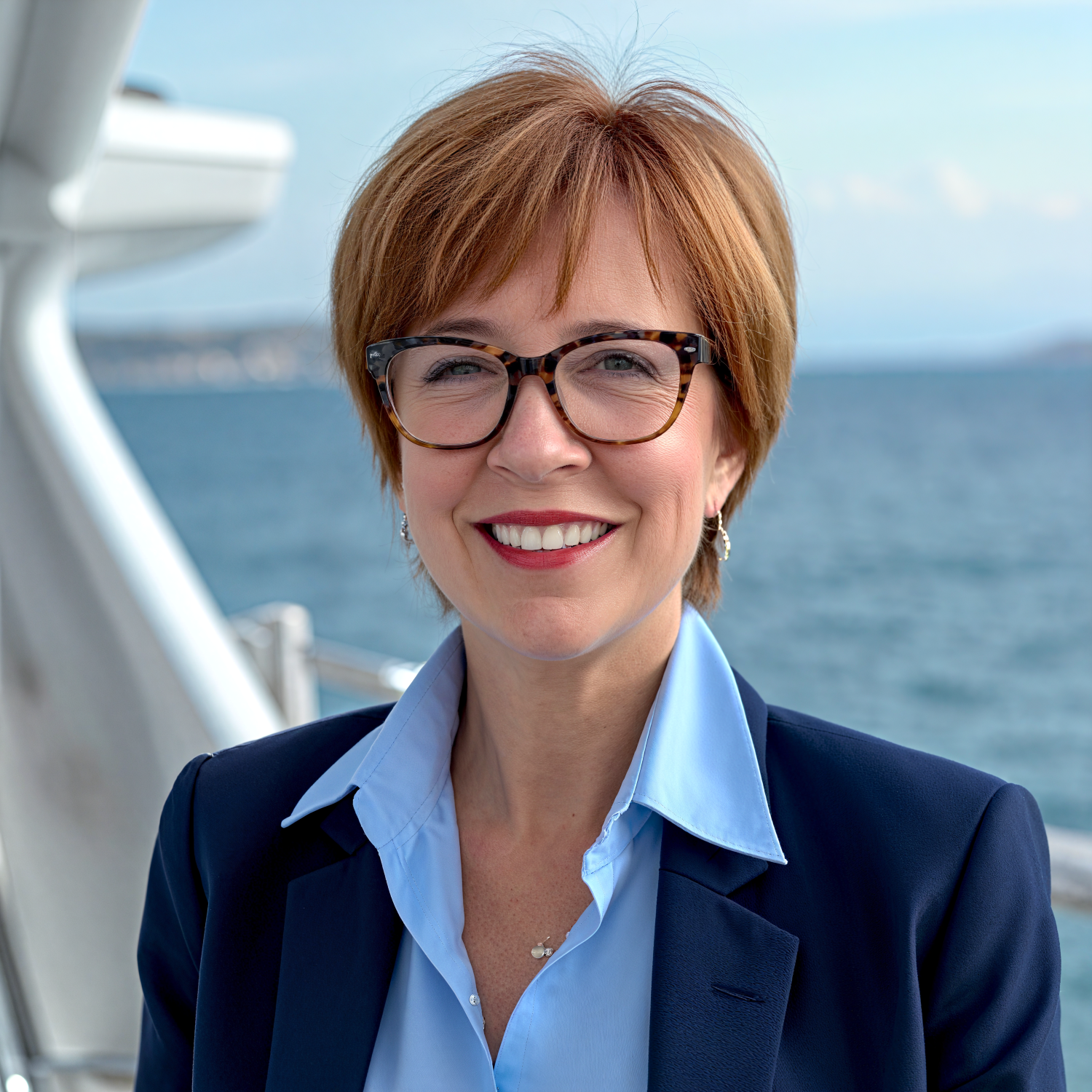
Photo courtesy of Ascend Bank
Susan Andros
Executive Vice President and Chief Risk Officer, Ascend Bank
In a regulatory environment that constantly seems to be changing, Susan Andros says she is excited to be working at a community institution such as Ascend Bank.
The bank recently named Andros its chief risk officer. In her role, she will be responsible for the bank’s credit risk, operational risk, compliance and strategic risk.
Andros has experience working at big national names such as Citi Bank, Wells Fargo and Synchrony Financial. She has done work in bank remediation and has also developed governance, reporting and assurance models.
Now instead of “putting out fires” she is excited to begin making an impact on a different scale.
Q: What’s it like to be able to go into that community banking environment and what stood out about Ascend Bank in the hiring process?
A: Community has been on my radar for a couple of years, thinking I’ve done all the big banks. I’ve seen many things, much of which is public, but some isn’t. I wanted to get into a smaller environment that was in growth mode, not in rescue mode, done too much of that. I also wanted to be with leadership that got it. By getting it, it’s like if I talk about a need for risk acceptance, if I say we need to enhance that control, if I say this product could serve an appropriate piece of the market, but we’re going to make sure we have incredible monitoring, because it’s a little risky, things like that. I’m being generic deliberately, but I’ll tell you what got me. It was when I interviewed with our chief talent officer and Kyle [Eagleson], our CEO, they talked to me about servant leadership. I always wanted to be a manager. It was a big deal at IBM when I got promoted. I’ve developed people, I am a multiplier. That means I grow talent and step back. To hear a company that is focused on doing that, never in my career did I see servant leadership, and that means if we put our people first, our customers will feel it, and they will feel that they are first and I wanted to kick the tires on that. I told them, that’s magic and fortunately, they wanted me.
Q: What are some of the differences between working for some of those national players in terms of the risk environment towards coming to more of a community institution?
A: I would say the first thing you would notice is scale. I was at Synchrony, and we built out colocation data centers, brand-new. Fifty, really fantastic. My team had a top-to-bottom risk assessment, and we were very proud. Then I go to Wells Fargo, it was a factor of eight times. That’s a lot. When I compare the level of regulatory findings, otherwise known as matters requiring attention, sometimes in the double digits at Synchrony, and in triple digits at Wells – rightfully so. You know, all of Wells’ woes and in fact I got a nice present as I was changing jobs that everything was cleared, and I got an email from one of the leaders who talked about my impact on that. So that was just really rewarding.
But coming back to Ascend, [the bank] has such a small number of people that it is shocking to me all that they do, and here’s why they work smarter: They see the whole picture. When I go into credit review, I hear about “we did a drive by,” and “this is where that construction loan is progressed.” Hands-on, know-your-customer differentiated service because you know them, and you know what they need, and you can make recommendations. It’s all about relationship, not “I got to sell another deal.” You certainly know about sales practices at Wells – God, that was ugly. I would never expect that here. [Ascend] doesn’t say “I don’t verify, then trust.” I’ve got Kyle’s repeating my phrase, “we’re going to verify, then we’re going to trust” and that’s the difference in a small bank. You need to teach some of the fundamentals to make sure that as we scale and it’s harder to know every detail about a vendor, what details do you need to know.
Q: I would love to get your sense of the current regulatory environment. It seems like things can change rather rapidly.
A: I find that question fascinating. Every day I read Bloomberg, and I’m like, ‘’What are they going to tell me now?” I read a lot of sources, but that’s the one that pops on my phone. Reputational risk is something that I feel is the heart of what makes you want to have a controlled environment. When the Federal Reserve is taking reputational risk out of their exams you know it’s pressure from Washington, D.C. We all used to in banking [say] “What’s Elizabeth [Duke, a former Fed vice chair and chair of Wells Fargo’s board] up to now?” She was nothing compared to what we’re facing. I mean that from an enormously high rate of change at a pace that is unprecedented in a regulatory environment. So, I worry about things like crypto: When are we going to tap into those waters? Do we care about FDICIA controls? Of course, we do for ourselves, but there’s threat that that’s not going to matter, right there. The CFPB: will they exist, and the late fees and the challenges they put on us? It’s almost like, is it the Fed of the decade or the tenure of President Donald Trump? Do we take it seriously? Do we undo some of the work we built?
It’s really hard to have the crystal ball, and I could scare you by pulling up a spreadsheet, which I will not, but it’s the list of all the regulatory changes last four years. It’s a tough time to be in this business, and with all the changes you’ve got pressure on some of our population. We hosted something at Yale University for Climate Haven, and I asked the founders, “How are you doing with Washington’s cuts?” And he said, “We got cut a million dollars.” In a nonprofit that’s doing such good work that’s really hard, but they figured out how to work around and we’ve been a support structure for them. You got to manage prudently and navigate the waters and make sure your team understands some of this. What are our priorities and how do we focus?
Q: What are certain areas where you hope to help Ascend Bank grow, and specifically in your role be able to grow as an employee in this role?
A: I’ve never had credit reporting to me before. I have been a risk person brought in to enhance credit processes, but I now have credit officers and credit risk reporting to me. So that’s my growth. I happen to have a marvelous team. In an economic downturn, your loss mitigation needs to be a focus. [In] that, I do have too much background from a prior bank in a TARP environment. So it’s a balance of what do I already know, and what are they teaching me? And how do I help them lift up our processes? Let’s remember in banking, the loan officers and the credit analysts are the rainmakers. I am here to pave everything I can do. I tell Kyle this all the time that we are looking at reducing handoffs, turning around with tools and eventually perhaps AI. We’re treading carefully there, but we’re trying to equip those really smart people to get a thorough review done, but not have it be piecemeal. We want to streamline and make sure our customers know they can count on us to be thorough and to be fast.
Andros’s Five Favorite Books
- The Bible
- “Presence,” by Amy Cuddy
- “Multipliers,” by Liz Wiseman
- “The Women,” by Kristin Hannah
- “The Age of Unreason,” by Charles Handy

