




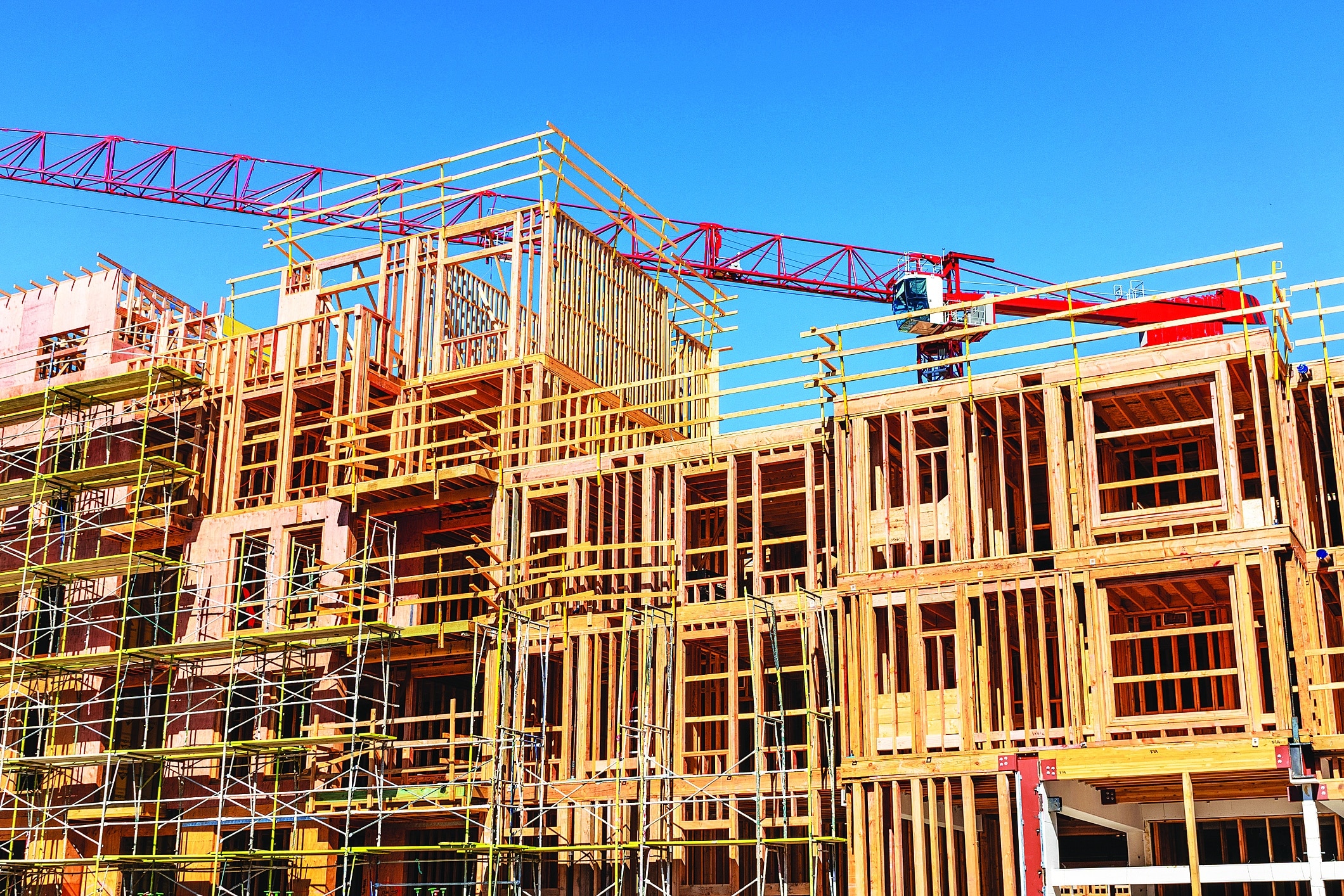
Communities that comply with the new housing production plan law will qualify for state grants and school building aid. iStock photo
For the first time, Connecticut communities will be required to set targets for housing production and tackle the state’s affordability crisis by encouraging development.
Housing advocates say Gov. Ned Lamont’s recently announced support for House Bill 8002 is a necessary step, but some question whether it contains sufficient penalties for communities that fail to comply.
“I would have preferred to see some element of enforcement for towns that are not participating in the system at all,” said Erin Boggs, executive director of the Open Communities Alliance, a Hartford-based public policy organization that specializes in zoning reform.
In a statewide policy change lauded by many supporters, the law eliminates on-site parking requirements for residential developments with 15 or fewer units.
Similar changes on the local level in Hartford and Bridgeport have catalyzed smaller infill projects, said Peter Harrison, Connecticut director of the Regional Plan Association for the tri-state region.
“We’ve seen a lot of two- and three-family homes being built on a regular lot and that’s really exciting,” Harrison said.
Parking requirements drive up development costs and ultimately, sales prices and rents, said Sean Ghio, policy director of the Hartford-based Partnership for Strong Communities.
“Connecticut has embraced for decades a very auto-dominated pattern of development, which has resulted in a sea of parking and no-so-walkable communities,” Ghio said. “And it drives up the cost of housing unnecessarily.”
State Money for Utilities and Transportation
Gov. Lamont announced last month that he would sign the latest version of the bill, after vetoing an earlier version in June.
Communities are required to submit annual housing growth plans to a new Council on Housing Development by June 1, 2028. The council will approve or modify the plans, and establish programs and guidelines encouraging development.
Communities can submit their own housing growth plans individually or through Connecticut’s nine regional Councils of Government.
Municipalities that do not submit housing growth plans will become ineligible for certain state infrastructure grants. Those that do will become eligible for infrastructure grants through a new program, with total funding yet to be determined.
Scheduled to launch by mid-2028, the housing growth program will offer grants to help communities pay for water and sewer expansions and transportation projects including roads, bicycle and pedestrian lanes and transit infrastructure.
“If a community has a housing growth plan that says they want to build more homes near rail stations but need infrastructure funds and state support, the state should fund it and support them,” Ghio said.
Communities with approved housing growth plans also will qualify for additional state reimbursement for school building projects.
Statewide Study of Sewer Capacity
The bill addresses a frequent objection from local officials to housing development, by authorizing a statewide study of sewer capacity.
“It’s a common refrain, and there’s good faith and bad faith on this: that we can’t have more housing in a community because of water and sewer capacity,” said Nick Kantor, program director of housing policy group Desegregate CT. “I think it’s really exciting, but it’s actually going to start to break down the silos and get better efficiencies across the state.”
The study, overseen by the Department of Energy and Environmental Protection, will assess statewide wastewater capacity and submit a final report that is due in July 2026.
The law’s effects won’t become apparent for several years, policy experts predict.
“The opposition makes this seem very apocalyptic, but it’s going to be very incremental,” Harrison said.
Details of communities’ plans and how they are implemented will be the key to its ultimate impact.
“What the governor has done has placed a lot of trust and faith in the state’s municipalities and Councils of Government to make sincere efforts at developing meaningful numbers for affordable housing, and plan and zone for them,” Boggs said

