




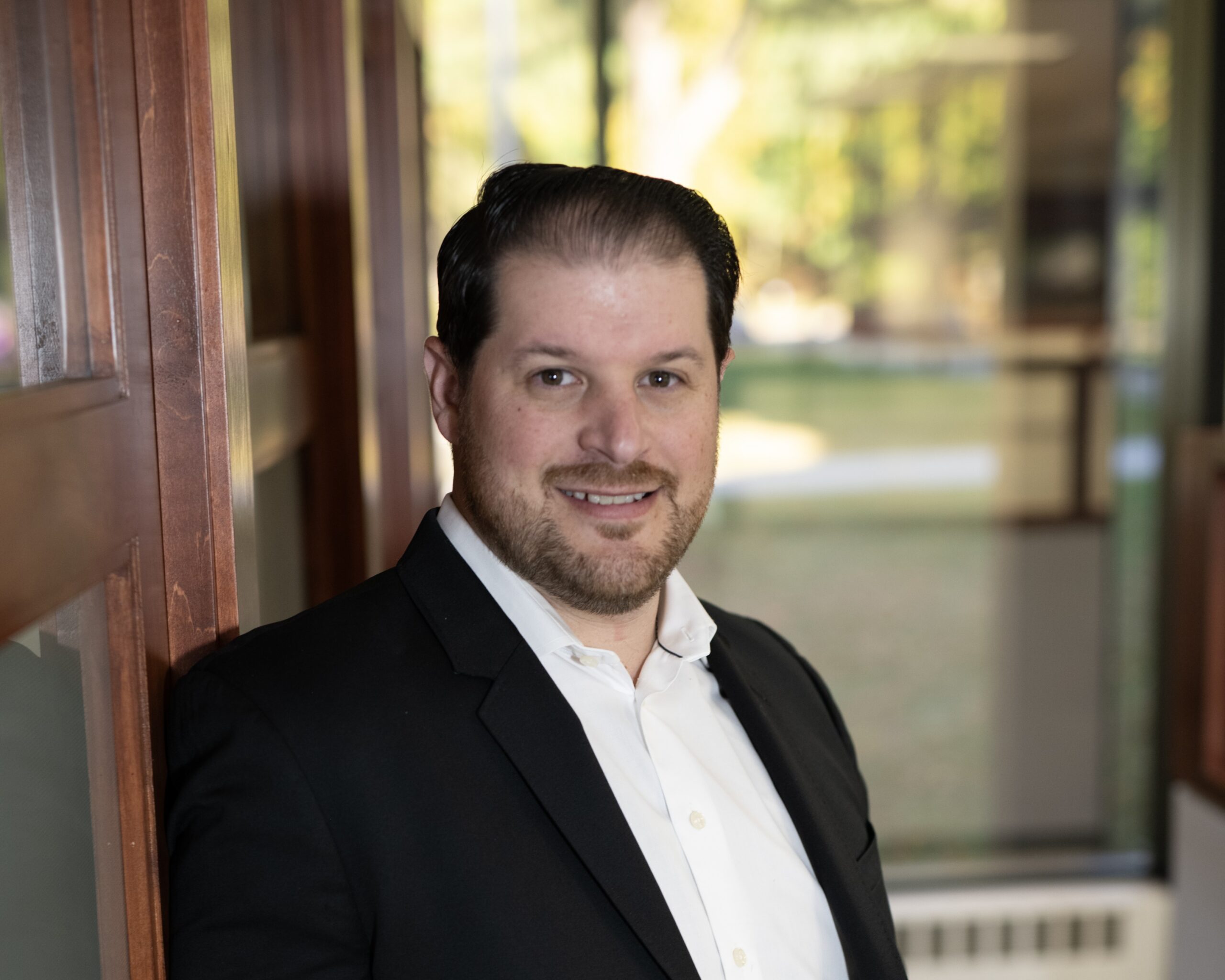
Photo courtesy of the Lustig Group
Justin Lustig
Co-Founder, The Lustig Group
Age: 36
Industry experience: 16 years
Justin Lustig worked for a who’s who of national retail landlords and developers in leasing, repositioning of traditional malls and adding retail condos in multifamily buildings before striking out in 2025 with his new retail brokerage and advisory firm, The Lustig Group. He shares the leadership role with his wife Nicolle, another veteran of the retail real estate industry, as the Briarcliff Manor, New York firm expands into Connecticut on behalf of new restaurants and retailers looking for new locations and landlords seeking to fill vacant storefronts. The firm has landed 30 accounts and is targeting southern Connecticut for growth, representing landlords in Norwalk and Groton in repositioning shopping centers to fill big-box spaces. It recently hired Jesse Broderick as senior director to work alongside Chris Lustig in Nutmeg State deals.
Q: What was the impetus for the expansion into Connecticut?
A: It was a corridor that I always enjoyed working. I live by the philosophy of Keep It Simple, Stupid and through southern Connecticut, it’s very easy to get an understanding of the landscape. New York gets a little complex because you have Manhattan, you have the borough, Westchester, Long Island, etc. But Connecticut, I felt I could get my arms around fairly quickly, so it was just a natural progression to launch into Connecticut along with the suburbs of New York and New Jersey.
Q: What are the major components of retail leasing and growth in Connecticut?
A: Open-air grocery centers are having their moment. Like suburbia, Connecticut is thriving, whereas 15 years ago maybe that wasn’t so much the case. Some of these centers would be lucky to get a national tenant coming in paying a mid-teen rent. But today, that same center could easily comment $35 to $40 a foot for premium tenants. It’s just been the shift since COVID of people leaving the density of these urban and urban-suburban areas and really heading into suburbia. Grocery-anchored suburbia is definitely hot. Then you have these smaller towns: Westport, Darien, etc. with those kind of urban infrastructure areas that are getting rents easily into the $70, $80 and $90 per square foot [range]. I wouldn’t say that’s a new thing, but it’s definitely still prevalent.
Q: How does your background working on the landlord side benefit you in your new role?
A: It’s been an interesting evolution and education because my previous experience has been with really large institutional firms. The vernacular is different when we’re handling some of these mom-and-pop ownership groups or smaller family offices. Things that I would say in a boardroom with Urban Edge or DLC, everyone will get it pretty quickly. You’ve got to take it back a few steps and try to get to the same point where you need them to kind of understand what you’re portraying. It’s really what these family offices or smaller ownership groups are trying to achieve, which has been an education for me, because when I’m on the large institutional side, it’s pretty simple. We’re either pushing stock price, or we’re pushing occupancy, or pushing per-square-foot rent. The [smaller] ownership groups are more like, “My son’s 15 and he’s going to step in the business in 10 years. Is this the best move for the property for him to eventually take on?” But it’s really been fun to learn that piece of it, for sure.
Q: So they’re looking at it from more of a long-term investment standpoint?
A: I would say a lot of them. Because their dollars are very impactful in the sense that they only have so much of it. They can’t go to the public markets and raise it. A lot of these assets may have been built by their great-grandfather, and there’s a lot of sentimental value to that. You’ve got to treat it kind of with white gloves and understand the pieces of it.
Q: Are local owners less focused on national chains? How do they approach the tenancy mix?
A: It’s a mixed bag, and I think that’s been refreshing from the groups I’ve worked because I could give them both sides of the coin. You want to entertain a national concept. There’s the pluses to that. Obviously, the credit perspective, and maybe a little bit more comfort that your rent check will show up. But you also deal with more macro headwinds, like what you’re seeing with Leslie’s Pool Supplies, closing 40 stores overnight. Even if you had a credit-worthy tenant at the time, what is that worth? Get in line to try to collect. When we’re entertaining regional or local concepts, I think it’s: what do they do for the overall asset? If it’s a really popular local or regional concept like my client Rico’s, which we’re taking national, but for the longest time it was a very popular southern Connecticut chain. When we come to a center, we bring real traffic. And we become a staple, and it allows leasing velocity off of that, which you wouldn’t get with a Verizon or a T-Mobile per se.
Q: Looking at the larger or mid-sized centers, what is the holy grail for landlords: a traffic generator, or gross sales? What’s most important?
A: The overall theme that I’m seeing today is definitely traffic generation. What big box or junior box are you bringing in that is going to bring the masses in, but also allows you to lease off of that? Maybe the focus won’t be specifically how many sales are coming out of that box specifically.
Q: How are landlords and tenants approaching the use of exclusivity clauses in leases? Are landlords more open to those than in the past?
A: It’s a big focus of our industry, especially on the landlord side to hammer that home. Whereas 15 years ago those activities were so broad. And they just choke your center. We’ve seen so many concepts merging in and out of each other in what their offerings are. The industry has done a really good job of nailing down primary uses. A lot of what I focus on, and my peers focus on, is that when we’re negotiating these exclusive clauses: what specifically are you doing, and how much of that needs to be protected? We’ve been very successful getting it very specific that the core business or restaurateur or gym is protected for exactly what they do, but they still allow someone who maybe has 10 or 15 percent of ancillary use that overlaps, but doesn’t kill their bottom line who can still come in and coexist with them. Which is what has to happen, because there’s only so many tenants left today.
Q: Are you still seeing growth in the experiential entertainment-type tenants?
A: It’s almost been the opposite. The trampoline parks and the entertainment parks and pickleball, they had their moment five years ago. From the assignments I work for and peers I talk with frequently, they are very hesitant to do a lot of these entertainment concepts today, unless it’s a really difficult box that has a lot of square footage that these guys can intelligently lay out. They just cannibalize themselves. They had 10 different trampoline parks pop up overnight. There’s only so much market share you could sustain, right?
Q: What are your biggest accounts on the tenant side seeking expansion?
A: Riko’s Pizza is a big focus of ours right now. We’re heavily growing in Connecticut and New Jersey and Florida, and we have hopefully a few announcements with some franchise groups. A concept out of South Korea, Twosome Place, are breaking into the U.S. We’ve been retained to help them grow in North Jersey, specifically. Outside of that, Mattress Warehouse is expanding in New York and Connecticut. They’ve been super aggressive.
Q: What about on the landlord side?
A: We’re getting close to finalizing a deal for the former Bed Bath & Beyond in Norwalk. We’ve already done a children’s entertainment concept and a dance studio. We are also working on Groton Shopper’s Mart, a former Planet Fitness that we’re focused on filling about 11,000 square feet. The ownership there has done a fantastic job of turning that center around. They redid the facade, put a lot of money into it, brought TJ Maxx in, so that’s been a really fun project.
Q: How do you and Nicolle break up the responsibilities at your firm?
A: She was more on the high street retail scene than I. So we had this beautiful scenario where we can almost touch every type of real estate from a leasing perspective and handle any sort of project, which makes us very unique. We’ve been blessed with a growing team over the past 18 months. Jesse Broderick has come on and helped me in Connecticut. I’ve known Jesse for 15 years and we started together at DLC. He lives in Stamford, so he’s my partner on the majority of these assignments. And then Nicolle works closely with Director Kendal Hand-Freda, who focuses on New Jersey and New York. We pick and choose on the tenant assignments and project assignments where the strong suits are.
Lustig’s Five Favorite Ohio State Football Games:
- Ohio State vs. Miami – 2003 Fiesta Bowl / National Championship Score: 31–24, double overtime
- Ohio State vs. Michigan – 2006 Score: 42–39
- Ohio State vs. Alabama – 2015 Sugar Bowl / College Football Playoff Semifinal Score: 42–35
- Ohio State vs. Michigan – 2016 Score: 30–27, double overtime
- Ohio State vs. Texas – 2025 Cotton Bowl / College Football Playoff Semifinal Score: 28–14

