




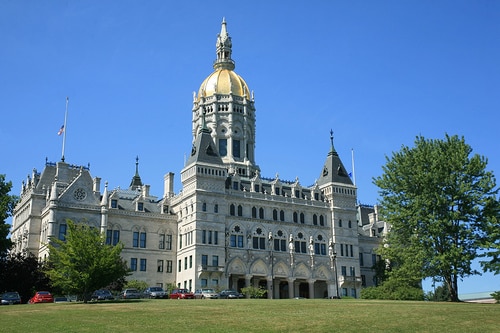
File photo
A state revenue package that rejects much of Democratic Gov. Ned Lamont’s proposed sales tax expansion, yet includes new or higher taxes on alcohol, capital gains income, prepared meals, digital downloads, cigarettes and more will become the basis for upcoming budget negotiations.
The Democratic-controlled Finance Revenue and Bonding Committee approved the bill along mostly partisan lines Wednesday, despite complaints from Republicans that the plan still includes too many tax increases and repeats the state’s past mistakes of over-taxing and over-spending. The vote comes a day after the Democratic-controlled Appropriations Committee approved a two-year, $43.3 billion spending plan which included about $130 million more than Lamont’s budget.
“We’re continuing down that path of dangerous decision-making,” warned Republican Rep. Chris Davis of Ellington.
GOP lawmakers voiced strong concern about the proposed new surtax on capital gains income in the second year of the budget, predicting it could encourage more of the state’s wealthy to flee the state. The proposal is expected to generate $262 million annually. Lamont has said he opposes imposing such a tax, likening it to an increase in the personal income tax rate. The revenue package includes some things Republicans support, such as the elimination of Connecticut’s gift and business entity taxes.
Democratic Sen. John Fonfara of Hartford, the revenue committee’s co-chairman, described the package as fiscally responsible.
“The revenue increases in this bill are minimal, they are recurring, and they are predictable,” he said, adding how lawmakers faced the challenge of having to fill revenue gaps left by previous one-time revenues used to balance the state’s budget.
The nonpartisan Office of Fiscal Analysis estimates the package will increase General Fund revenues by more than $1 billion in fiscal year 2020. The increase is estimated at $1.3 billion in fiscal year 2021. Ultimately, the revenue and spending bills will become the basis for negotiations between Lamont and state legislators on a final budget plan. They face a June 5 deadline.
Lamont said in a written statement Wednesday that he appreciated the “areas of intersection” between his budget and the finance committee’s plan. However, he expressed concern with the amount of increased borrowing lawmakers are proposing, noting how bond rating agencies have looked favorably on his so-called Debt Diet.
Democratic Rep. Jason Rojas of East Hartford, the revenue committee’s co-chairman, said lawmakers felt the need to “strike a balance” when they crafted the revenue package. There has been strong opposition from many industries that faced having their goods and services taxed at 6.35 percent under Lamont’s budget. At the same time, Democratic members of the General Assembly’s Progressive Caucus have been pushing for higher state taxes on wealthy taxpayers, something Lamont, a multi-millionaire former businessman has opposed.
Under the revenue bill, the state’s 6.35 percent sales tax will be applied to five new items: interior design services, some parking services, transportation companies such as Uber, safety apparel and non-coin operated dry cleaning. Lamont’s original list was much longer, including everything from vegetable seeds to veterinary services. The committee’s proposal also imposes the full 6.35 percent sales tax on digital downloads; includes a 10 cent-tax on paper and plastic bags, with some exceptions; creates a 1 percent prepared foods taxes; imposes higher taxes on e-cigarette liquid; raises the minimum markup on cigarettes; and increases a state excise tax on alcohol by 10 percent, a move that’s predicted to generate more than $6 million annually.

