




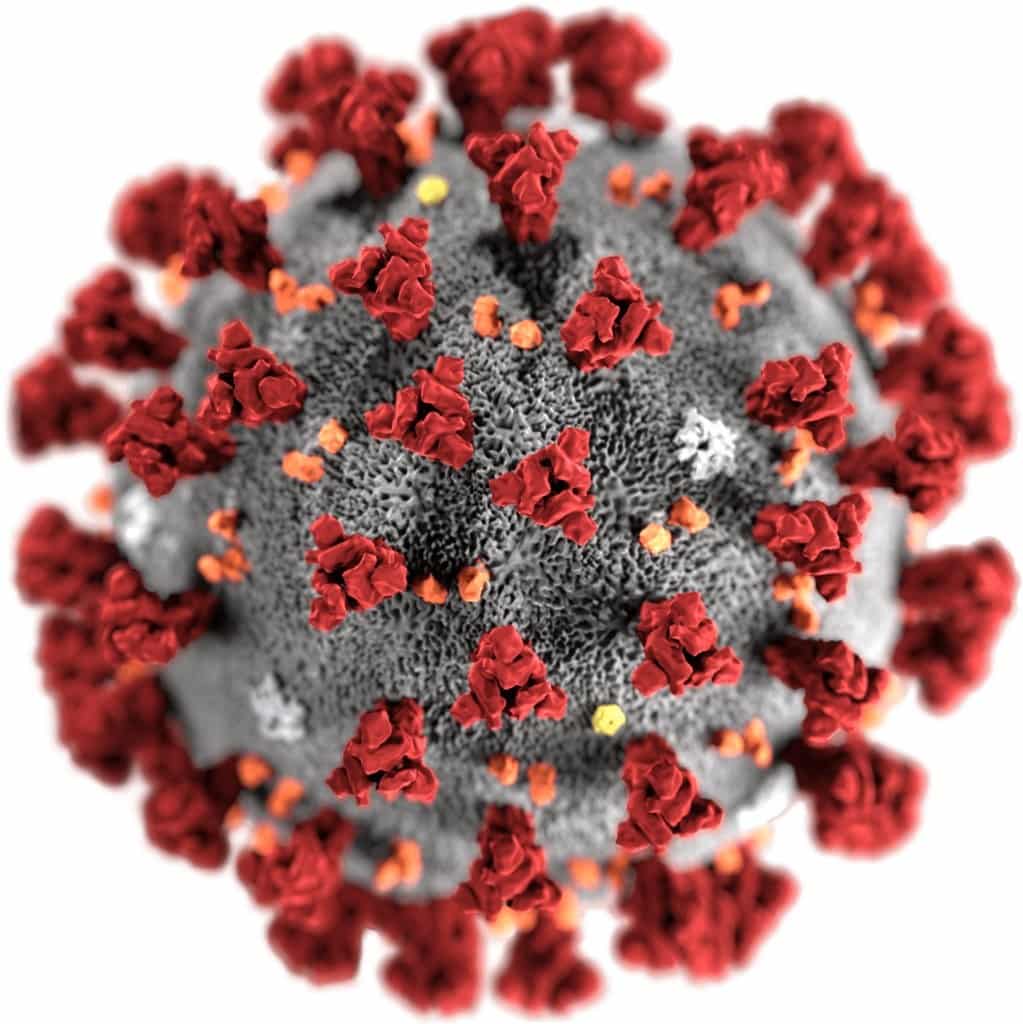
An illustration of the new coronavirus COVID-19. Image courtesy of the Centers for Disease Control.
Connecticut has taken the first steps toward planning its reopening once the COVID-19 pandemic subsides, Gov. Ned Lamont said Monday.
Lamont joined the governors of New York, Rhode Island, New Jersey, Pennsylvania, Massachusetts and Delaware in agreeing to a working group that will come up with a regional blueprint with input from health care and economic development experts.
The group of governors said the regional council will be charged with finding a way to ease social isolation without triggering another flareup for the virus through testing, contact tracing, treatment and social distancing.
“All of our pandemic here in Connecticut is all along that [Interstate] 95, Metro-North corridor. We have hundreds of thousands of people going back and forth between New York and Connecticut,” Lamont said. “It’s the commuter corridor for us, but it’s also the COVID corridor, which is why it’s so important that we work together thoughtfully on this.”
In high-infection areas, such as Fairfield County near the New York border, preparations could include testing whether someone has developed antibodies for COVID-19 and might be able to go work sooner, Lamont said.
Lamont said he will take advice from the newly formed Reopen Connecticut Advisory Group, which will be composed of medical and business experts.
The panel will be co-chaired by Indra Nooyi, former CEO of PepsiCo and co-chairman of the Connecticut Economic Resource Center Inc. board of directors; and Dr. Albert Ko, chair and professor of epidemiology at Yale University. Nooyi, Ko and Paul Mounds, Lamont’s chief of staff, will also be Connecticut’s representatives on the multi-state council working on a regional framework for lifting stay-at-home orders.
The state has reported 602 deaths from COVID-19, the disease caused by the virus. As of Monday evening, over 13,300 people in the state had tested positive for the virus.
For most people, the virus causes mild or moderate symptoms, such as fever and cough that clear up in two to three weeks. For some, especially older adults and people with existing health problems, it can cause more severe illness, including pneumonia.

