




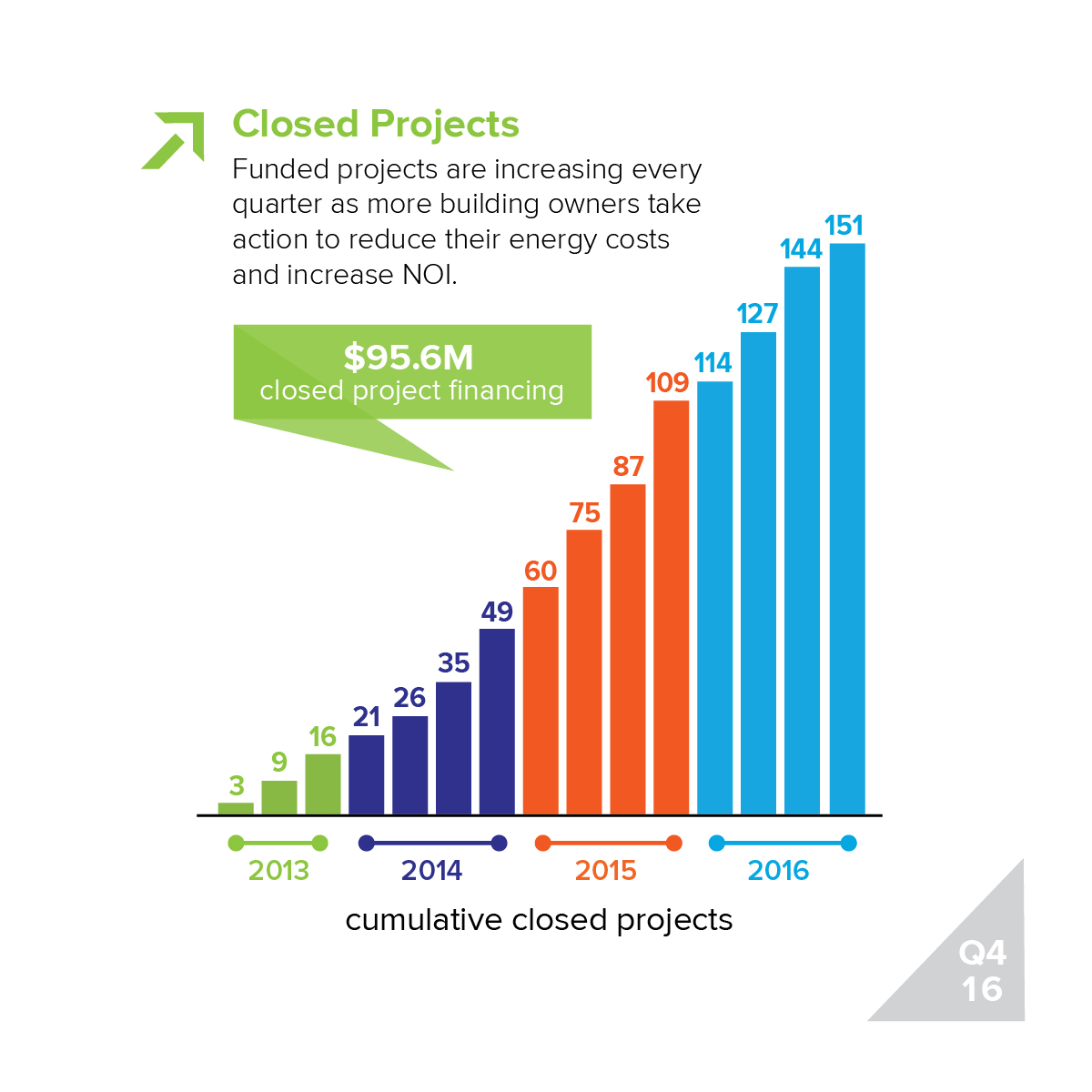
 As the CT Green Bank celebrated its five-year anniversary, it closed fewer projects in its popular financing program for clean energy upgrades to commercial real estate. That may sound like a negative, but it’s actually exactly how the Green Bank should be working.
Last year, the Green Bank closed 42 projects in its C-PACE, or Commercial Property Assessed Clean Energy, program. The program provides 100 percent of upfront project costs and is repaid as a long-term assessment on the property. Since the Green Bank’s inception, the organization has approved 194 programs through C-PACE.
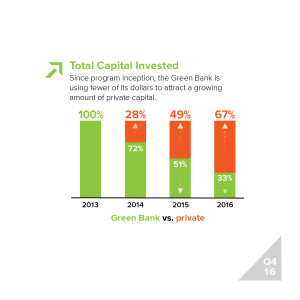
But the Green Bank’s mission has always been to attract more private capital to the clean energy sector in Connecticut. It closed fewer projects last year simply because it attracted more private capital to clean energy in Connecticut, said Mackey Dykes, vice president of commercial, industrial and institutional programs at the CT Green Bank.
“The C-PACE program has attracted private capital providers to the state who are using the C-PACE platform to directly provide 100 percent capital to borrowers, so you’ve got no state funding going into these projects,” Dykes said. “It’s the ultimate leverage of private capital.”
 In other words, it’s working.
Over the life of the C-PACE program, the Green Bank has closed $95.6 million in project financing. They range in size from $30,000 to $8.3 million, with the average around $628,000, the Green Bank said in materials highlighting its fourth quarter. Of those properties improved through the program, 27 percent are industrial properties, 23 percent are office buildings, 21 percent are retail, 14 percent are nonprofit and 15 percent “other.”
“CPACE is a successful program, as the numbers show, but we believe we’re really only scratching the surface with the potential in the market,” Dykes said.
Looking to 2017 and beyond, Dykes said that in addition to increasing participation in the C-PACE program, the Green Bank is now hoping to also raise awareness for its new Energy on the Line program. That program, which launched last spring, provides supplemental funding up to $50,000 for energy efficient upgrades to owner-occupied manufacturing properties.

