




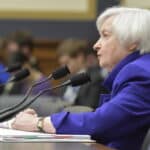
Bank Failures and Rescue Test Yellen’s Decades of Experience
Working against the clock to stop a developing banking crisis, Treasury Secretary Janet Yellen had until sunset on Sunday, March 12, to come up with a plan to calm the U.S. economy.
Working against the clock to stop a developing banking crisis, Treasury Secretary Janet Yellen had until sunset on Sunday, March 12, to come up with a plan to calm the U.S. economy.

The Federal Reserve is getting some unwanted help in its drive to slow the U.S. economy and defeat the worst bout of inflation in four decades: a cutback in bank lending.

Only 10 percent of U.S. adults say they have high confidence in the nation’s banks and other financial institutions in the wake of Silicon Valley Bank’s collapse.
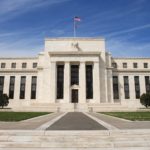
The Federal Reserve extended its year-long fight against high inflation Wednesday by raising its key interest rate by a quarter-point despite concerns that higher borrowing rates could worsen the turmoil that has gripped the banking system.

The Federal Reserve is grappling with a hazier economic picture clouded by turmoil in the banking industry and still-high inflation just as it meets to decide whether to keep raising interest rates or declare a pause.
Treasury Secretary Janet Yellen is trying to project calm after regional bank failures, saying the U.S. banking system is “sound” but additional rescue arrangements “could be warranted” if any new failures at smaller institutions pose a risk to financial stability.

While President Joe Biden called Monday on Congress to strengthen the rules for banks to prevent future failures, lawmakers are divided on whether any legislation is needed. And some congressional leaders are skeptical that a closely divided Congress will act at all.

New York Community Bank has agreed to buy a significant chunk of the failed Signature Bank in a $2.7 billion deal, the FDIC said late Sunday.
Eleven of the biggest U.S. banks Thursday announced a $30 billion rescue package for First Republic Bank in an effort to prevent it from becoming the third to fail in less than a week and head off a broader banking crisis.

None of the warning signs before Silicon Valley Bank’s collapse were secret. Yet bank supervisors at the Federal Reserve Bank of San Francisco and the state of California did nothing as the bank rolled over the cliff.
The Federal Reserve is facing stinging criticism for missing what observers say were clear signs that Silicon Valley Bank was at high risk of collapsing into the second-largest bank failure in U.S. history.

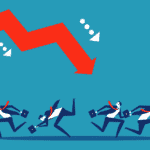
With bank stocks cratering Monday as investors in regional banks like First Republic Bank and now-defunct Silicon Valley Bank worry about what lender may be next to topple, some investors are calling for the Fed to make cuts to interest rates soon to stanch the bleeding.

Despite message of reassurance from the White House, investors continued to dump shares in bank stocks Monday morning. Shares of First Republic Bank plunged more than 70 percent even after the bank said it was accessing emergency funding from the Federal Reserve.

The FDIC seized the assets of Silicon Valley Bank Friday morning, marking the largest bank failure since Washington Mutual during the height of the 2008 financial crisis.
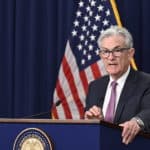
Federal Reserve Chairman Jerome Powell appeared to be trying to quell any assumption that the Fed has already decided to raise rates more aggressively based on a recent string of data that pointed to strong economic growth and still-high inflation.
While the biggest news to come out of Fed Chair Jerome Powell’s regular testimony before Congress was his willingness to make aggressive interest rate hikes to cool the economy, he also revealed that the central bank is worried about American financial institutions’ work in the crypto space.

The Federal Reserve could increase the size of its interest rate hikes and raise borrowing costs to higher levels than previously projected if evidence continues to point to a robust economy and persistently high inflation, Chair Jerome Powell said Tuesday in prepared testimony to a Senate panel.

The average long-term U.S. mortgage rate hit a three-month high this week, reflecting higher Treasury yields and expectations that the Federal Reserve will continue to raise its benchmark rate and keep it there until inflation recedes.

A majority of the nation’s business economists expect a U.S. recession to begin later this year than they had previously forecast, after a series of reports have pointed to a surprisingly resilient economy despite steadily higher interest rates.

A lowcredit score can hurt your ability to take out a loan, secure a good interest rate, or increase the spending limit on your credit card.

