




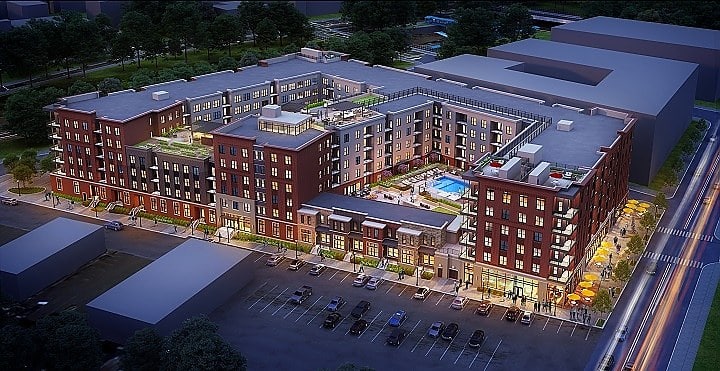
Ground floor retail and 299 market-rate rental units are under construction at Adam America's new project in New Haven's Wooster Square. Image courtesy of Niles Bolton Assoc.
Despite the state’s reputation for occasionally difficult economic conditions, market-watchers expect the commercial real estate sector to remain strong in all three of Connecticut’s three major metros in the coming 12 months, with New Haven likely to lead the pack.
“[New Haven] is maturing very nicely and continues to grow,” said Victor Nolletti, senior managing director for investments at Institutional Property Advisors and a top broker with Marcus & Millichap. “You have tremendous velocity in New Haven, between Yale University and Yale Medical Center and all the activity and bioscience and technology.”
Around 1,500 units of multifamily housing are proposed, permitted or under construction in and around New Haven’s downtown, including 200 permitted in the first five months of 2019.
The city’s potent mix of walkability and downtown entertainment options is proving irresistible to Millennials, said CBRE broker David Hansen. Around three-quarters of all newcomers to the area in recent years have been Millennials, he said, putting it among the most Millennial-friendly cities in the country.
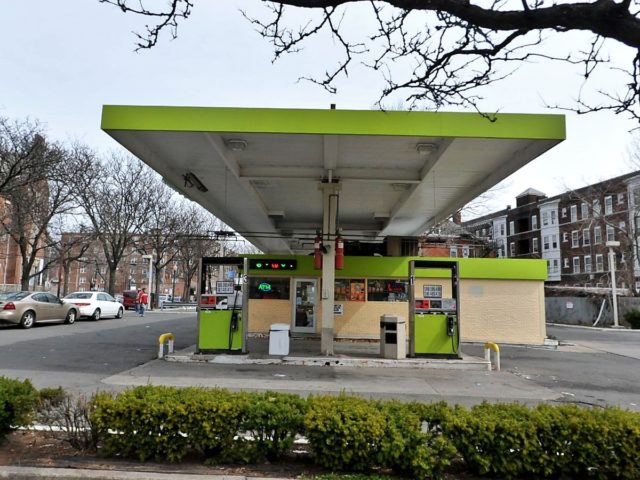
The owner of this Howe Street gas station near downtown New Haven has proposed demolishing his business and building 44 market-rate apartment units in its place. Image courtesy of the city of New Haven.
Multifamily Investors Eye New Haven
New Haven’s charms haven’t gone unnoticed by investors, Nolletti said, helping fuel the recent building boom and recent sales of existing multifamily assets. Multifamily assets in several recent transactions had cap rates and per-unit revenue rates commensurate with the core Stamford market, he said.
“We’re seeing more activity from private and quasi-institutional investors in New York and New Jersey looking to place dollars in less-regulated environments,” he said. “Some regulatory constraints are pushing dollars north.”
A recent Marcus & Millichap research report noted that, across the region, the average cap rates for multifamily properties hover in the 6 percent rage, 200 basis points above initial returns for similar assets in New York. The average effective rent for the area is $1,812 per month, with growth expected in both New Haven and Fairfield counties.
While the downtown area has some runway left, Nolletti said, many of the easy development sites have been claimed. In the coming year the 450-unit City Crossing project from The RMS Cos. – which is successfully leasing apartments at rents comparable to downtown New Haven, he noted – will continue to build out and help revitalize a stretch between downtown New Haven and the city’s train station near Yale Medical Center. In addition, Hansen said progress is expected on a long-stalled development on the site of the now-demolished New Haven Colosseum, featuring a boutique hotel, now that Norwalk-based Spinnaker Real Estate Partners has taken over the project.
Stamford to See More Offices Repurposed
Like New Haven, Stamford is seeing strong performance in its multifamily assets, Marcus & Millichap’s Nolletti said.
“Thousands of apartment units have been built and absorbed at a pace of 15-30 units a month in recent years,” he said. “People want to be in Stamford.”
This has helped encourage some office landlords with underperforming class B office space to reposition or redevelop their properties to include a multifamily component, a trend CBRE broker Tom Pajolek expects to continue into next year.
“People have a keen sense of where the demand is right now, and while class A, high-quality, well-located office buildings are tending to be the focus of tenants already in the market now, those that are less well-located are prime candidates for repurposing,” he said.
Citing Sacred Heart University’s decision to lease the former General Electric headquarters in Fairfield, Pajolek said educational and health care uses will likely join multifamily conversions as owners of underutilized Fairfield County commercial real estate try to find new uses for their properties. The vacancy rate in Fairfield County increased 2.2 percent to 25.3 percent in 2018, Cushman & Wakefield reported in April, with Stamford seeing the biggest increase of 460 basis points to 31.8 percent as GE Energy made its entire building at 800 Long Ridge Road available. Overall asking rents in Fairfield County are now $32.47 per square foot, a drop of $0.53 since the first quarter of 2018..
The increasing mix of multifamily units in the area’s business districts will likely have a positive benefit for the remaining real estate, beyond tightening up the market, Pajolek added.
“Today’s companies are truly aware of where the talent lives, they want to be able to attract the best talent they can who can live the best lives they can,” he said.
Leasing activity last year was dominated by a few very large deals, including WWE’s lease of 415,000 square feet in the former UBS headquarters in Stamford, and Pajolek said he expects the coming year will not be dissimilar, with a few very large deals dominating the market.
While Stamford’s office market continues to be less dynamic, recent moves by downtown and suburban Hartford landlords have set the area up for a much more competitive leasing environment.
The One Financial Plaza, CityPlace I and Goodwin Square buildings downtown have all received lobby and amenity upgrades, and recent upgrades and repositioning initiatives have occurred at Riverview Square in East Hartford, at Corporate Ridge in Rocky Hill and also at the Griffin Office Center in Windsor.
“Whereas in years past, improvements were more cosmetic in nature, now we are seeing more thought and analysis going into improvements and placemaking that enhance the overall employee and tenant experience,” CBRE Senior Vice President Mike Puzzo said.

