





Federal Reserve’s Likely Slowdown in Rate Cuts Could Disappoint Borrowers
Several surprisingly strong economic reports, combined with President-elect Donald Trump’s policy proposals, have led to a decidedly more cautious tone from the Fed.
Several surprisingly strong economic reports, combined with President-elect Donald Trump’s policy proposals, have led to a decidedly more cautious tone from the Fed.
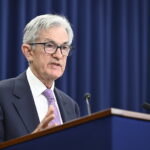
Chair Jerome Powell said Thursday that the Federal Reserve will now only cut its key interest rate slowly and deliberately in the coming months.

The president-elect campaigned on a promise to make homeownership more affordable by lowering mortgage rates, but his policies could do the opposite, some analysts say.

Wall Street is already making big bets on what take two for a White House led by Donald Trump will mean for the economy.

Between mixed economic signals and president-elect Donald Trump’s statements that he wants greater control over interest rate policy, it’s up in the air what happens next.

The president-elect outlined a wide-ranging agenda on the campaign trail that blends traditional conservative approaches to taxes, regulation and cultural issues with a more populist bent on trade.

No one knows how Tuesday’s presidential election will turn out, but the Federal Reserve’s move two days later is much easier to predict: With inflation continuing to cool, the Fed is set to cut interest rates for a second time this year.
The average rate on a 30-year mortgage in the U.S. rose for the fifth straight week, returning to its highest level since early August.

Mortgage rates have been climbing in recent weeks following a spate of encouraging reports on the U.S. economy, including a hotter-than-expected September jobs report and a snapshot of consumer prices.

The Small Business Administration has run out of money for the disaster assistance loans it offers small businesses, homeowners and renters, delaying much needed relief for people applying for aid in the wake of the destruction caused by Hurricanes Helene and Milton.

JPMorgan on Friday reported that its net income fell 2 percent in the third quarter as the bank had to set aside more money to cover bad loans.

The average rate on a 30-year mortgage in the U.S. surged to 6.32 percent this week, adding pressure on home buyers facing sky-high prices and a limited supply of houses for sale.

While Americans continue to struggle under unrelentingly high rents, as many as 223,000 affordable housing units across the U.S. could be yanked out from under them in the next five years alone.

Federal Reserve Chair Jerome Powell signaled Monday that more interest rate cuts are in the pipeline but suggested they would occur at a measured pace intended to support a still-healthy economy.

U.S. ports from Maine to Texas shut down Tuesday when the union representing about 45,000 dockworkers went on strike for the first time since 1977.
The rate dipped to 6.08 percent from to 6.09 percent last week, mortgage buyer Freddie Mac said Thursday. A year ago, the rate averaged 7.31 percent.

The Federal Reserve gave home shoppers what they hoped for this week: a big rate cut and a signal of more cuts to come.
Having all but tamed inflation, the Federal Reserve is poised to do something Wednesday it hasn’t done in more than four years.

Plenty of uncertainty still surrounds this week’s Fed meeting. How much will the policymakers decide to reduce their benchmark rate, now at 5.3 percent? Will it be enough to avert a recession?

The Treasury Department has issued regulations aimed at making it harder for criminals to launder money by paying cash for residential real estate.

